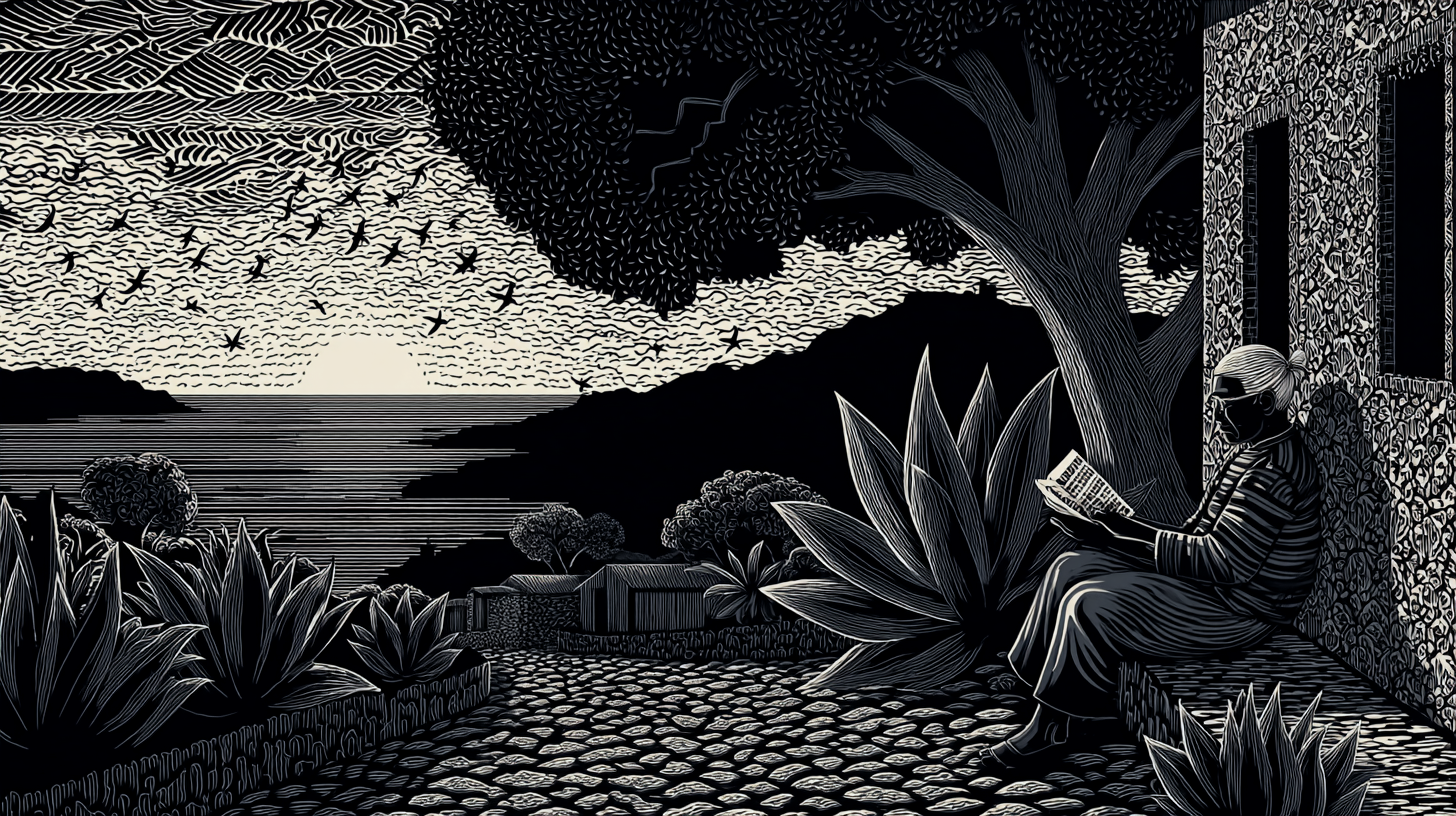
Many years later, when the grandchildren asked what it had been like the day Spain and Argentina met in the great northern city, the old men of the coast would remember first not the goal but the cold. For it was the morning of the nineteenth of July, and in Aracataca, where the almond trees have always dripped with heat, the thermometer fell to twelve degrees under a sky washed clear of every cloud, and the roosters, confused, did not crow until noon. The women said it was an omen, and the women, as always, were right.
It is a known thing that the world arranges its miracles and its massacres to happen at the same hour, so that no man may enjoy one without the shadow of the other falling across his plate. And so it was that on the very afternoon when a boy of nineteen prepared to walk out onto the grass of a stadium in New York, a boy named Lamine Yamal, the son of migrants who had crossed from Africa the way birds cross without asking permission of any border, two soldiers lay dead in the sand of Jordan and a third had vanished into the desert as men vanish in these stories, which is to say completely and without explanation. The armies of the north and the armies of Persia had been trading fire for eight nights running, each answering the other as lovers answer, unable to stop, and an old man in Tehran promised lessons that would not be forgotten, though the promising of unforgettable things is the surest way to be forgotten.
In Times Square the Argentines had gathered by the thousands, wrapped in sky-blue and white, weeping before the match had even begun, because they had learned across a century of solitude that joy must be wept for in advance, before some general or some bank can take it away. They had come from Buenos Aires and from places that had never seen Buenos Aires. In Bangladesh, a country that had never once qualified for the tournament and perhaps never would, whole villages had adopted the Argentine cause as their own, painting their walls with a flag that was not theirs, loving a team across an ocean the way one loves a dead relative in a photograph, which is to say more purely than one loves the living.
The ball had not yet fallen, and already the world was full of signs. To the north the forests of Canada burned, nearly two hundred fires at once, and their smoke drifted down over the cities of the enemy and the friend alike, so that in New York the fans coughed into their scarves and the sun turned the color of a blood orange, and no man could say where the border between the two countries lay, because smoke, like grief, has never respected a map. A president threatened to punish his neighbor for the filthy air, as though a man might be taxed for the direction of the wind.
And in Cuba, that green crocodile asleep in the water, the lights had gone out for the third time in ten days. The people sat in the dark of a six-month blockade and fanned themselves and waited, and the waiting had begun to curdle into something with teeth. A painter of that island, one Otero Alcántara, who had spent his years being erased by the men who governed him, arrived at last on the northern shore, an exile like all the exiles who ever left Macondo swearing they would return and never did. It is a curious law of the tropics that a country may lose its electricity and its artists in the same season and call it, in the official papers, stability.
Far away in the cold countries the war of the Russians and the Ukrainians ground on into its fifth year, and drones fell out of the sky onto warehouses near Moscow, storehouses of a thousand small unnecessary things, and seven men who had gone to work among the boxes did not come home. In that country the people had begun to hoard paper money again, filling their mattresses as their grandmothers had, because a people that has been betrayed by the future always turns back to the oldest magic it knows, which is a coin you can bite with your teeth.
But of all the news carried on the wind that cold clear morning, the one that would have made an old novelist set down his coffee came from Somalia, from the city of Mogadishu, where a handful of patient men bent over the decaying reels of the national radio, racing to save the recorded voice of their nation before it crumbled into dust. Decades of songs and speeches and the ordinary weather of a people, all of it dissolving on the tape like a name written on the beach. This is the true war, the one no army declares: the war against forgetting. For a village can survive the loss of its soldiers and even the loss of its lights, but a village that loses its memory will lie down in the road one afternoon and let the ants carry it off piece by piece, and no one will remember to grieve.
And so they played the match. Somewhere the ball rose and fell and rose again, and the boy who was the son of migrants ran beneath the smoke-dimmed sun as though the whole restless planet, the dead in Jordan and the dark in Havana and the crumbling voices of Mogadishu, had agreed to hold its breath for ninety minutes and pretend, all together, that the only thing that mattered in the whole turning world was where a leather sphere would come to rest. Perhaps that is what a game is for. Perhaps it is the last innocent lie we tell each other, the small clean miracle we allow ourselves between the large indifferent ones.
In Aracataca the cold did not lift until the afternoon, when the heat returned all at once, as it always does, and the old women went back to insisting the frost had never happened. But it had happened. On the nineteenth of July the roosters did not crow at dawn, and two continents wept before a whistle blew, and somewhere a nation's memory was being pulled from the fire one fragile inch at a time. It was, all agreed, an ordinary day, which is the only kind of day on which anything of importance has ever occurred.