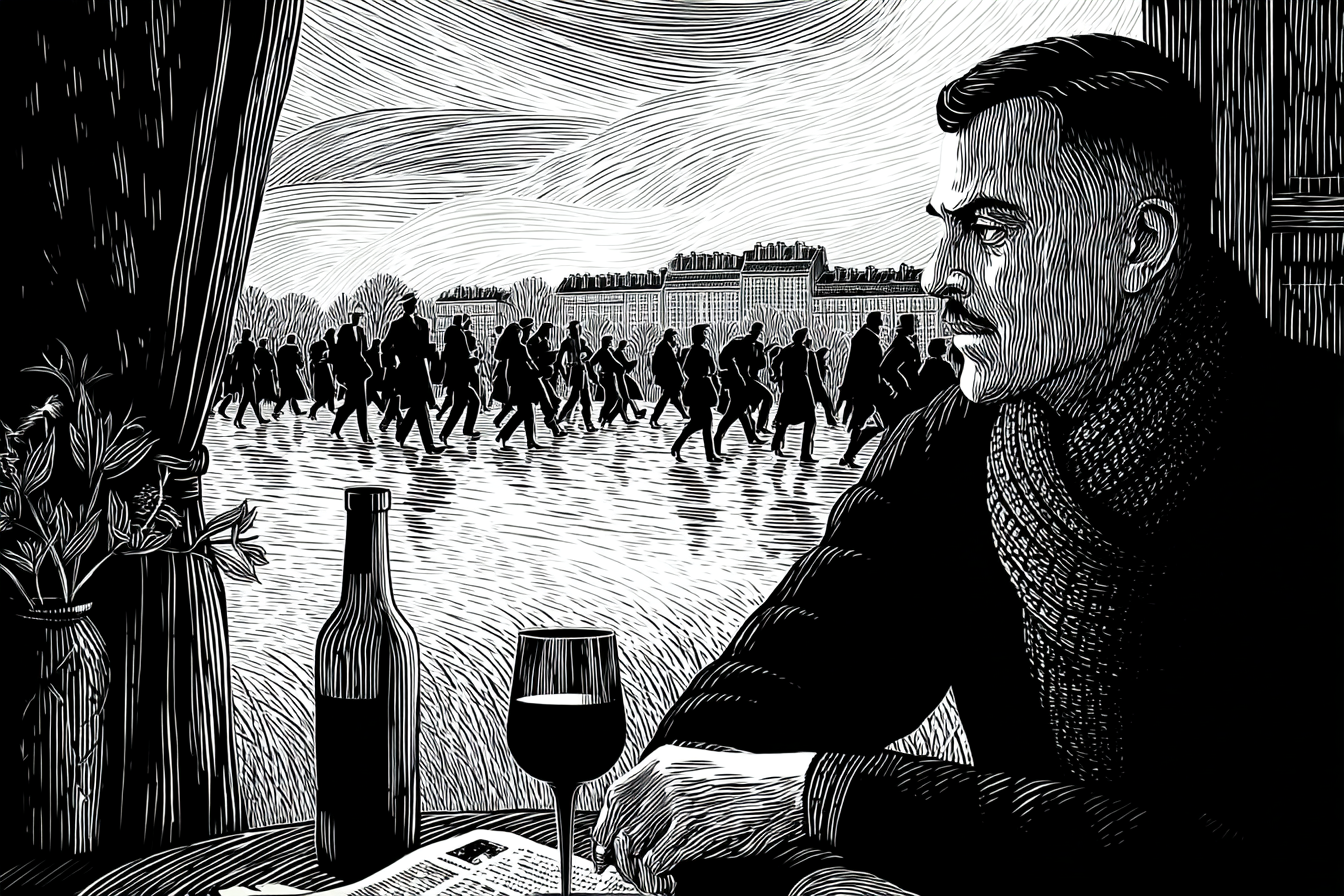
The heat came early to Oak Park and stayed. Twenty-nine degrees and the sky clear all the way down, no cloud to break it, the kind of day when a man sits on the porch with the paper and does not want to move and does not have to. I read that Spain had beaten France two to nothing in Dallas and I put the paper down and looked at the light on the grass for a while and was glad.
You have to understand about Spain. I have been in her bullrings and I have marched with her men when the marching meant something and the dying was real, and I have never loved a country the way I loved that one. So when I read that they had beaten France in the semifinal I did not think of football. I thought of the way a good matador works close to the horns, without hurry, without fear, doing the true thing and doing it clean. The reports said Spain played a masterclass. They said the boy Yamal kept his streak. The French, who had meant to win, blamed the referee, and Deschamps said his men were devastated, and Mbappé spoke of technical and tactical blunders. That is what the beaten always say. Spain controlled the game and made them pay for their errors and that is the whole of it. There is no arguing with two goals.
It was Bastille Day. Macron had the allies to Paris for the parade, the tanks and the planes and the flags, all of Europe standing straight in the sun to show it was strong. A man from the papers wrote that Europe flexes its muscle in Ukraine and sits on the sidelines in Iran, still a hostage to America. He was right, though it does no good to say it. You can have the finest parade in the world in the morning and lose your football in the evening and both things are true and neither cancels the other. The Spaniards said they had given the French a proper trashing. On Bastille Day. That is the kind of thing that stays with a country a long time.
But there is always the other column, the one that runs beside the joy, and you cannot read the one and skip the other. That is not how it works.
They were fighting again over the Strait of Hormuz. Four days of it now, the fourth day running, and the Americans had put the blockade back on the Iranian ports at five in the morning our time, and the strikes went on. Trump said he would hit the bridges and the power plants unless the talks started again. He said the strikes would continue until he said they would stop. He had wanted twenty percent of everything that passed through the strait and then he took that back, which the correspondents read as a man who does not know how to end the thing he started. Four months this war has run. Iran said it had struck two tankers and fired on the American bases. The IRGC claimed damage. I have covered enough wars to know that when both sides are claiming and neither is winning, it is the men on the ships and the men under the bridges who pay, and they are not asked and they are not counted right.
In Ukraine they counted, at least. The United Nations said more than two thousand two hundred civilians were killed or hurt last month, the worst month since the spring the whole thing began. Numbers like that stop meaning anything if you let them, so you must not let them. Each one was a man or a woman in a doorway or a field who woke that morning thinking of ordinary things.
And in Spain, the same Spain, the fires were burning. Seven Britons dead among thirteen, the papers said, twelve of them foreigners caught in the hills where the country goes brown and hard in July. It is a strange thing to love a place for its heat and its dry gold light and then to read that the same light had killed. But that is the country. It gives you the sun and it gives you the fire and it does not apologize, and a man who loves it honestly loves both.
There were the smaller things too, the ones you read and do not forget.
A man on a Ryanair plane was near sucked out of it when something opened at height, and his wife said, if we die, we die together. I read that twice. There is a whole novel in it that no one will write because she already said it better in seven words than any of us could in seventy thousand.
They sold a Tyrannosaurus at Sotheby's, the bones of a thing that walked the earth sixty-seven million years ago, and it went for more money than any dinosaur before it. Somewhere in that there is a joke about what men will pay for death when it is old enough and safe enough to hang on a wall.
De Beers stopped the digging at its big South African mine, two years dark, four thousand men sent home because the world has decided it wants fewer diamonds. And the publishers took Google to court, saying it fed their books to its machines to teach the machines to write. I have views on machines that write. I will keep them to myself, except to say that a machine has never stood close to the horns and it never will, and that is why it will never write the true sentence.
The heat held all afternoon in Oak Park, twenty-nine and clear, and I thought about Dallas and about the strait and about the hills of Spain burning, and how a single day carries all of it at once and does not stagger under the weight. The sun went down the way it always does. It will come up tomorrow over the fires and the tankers and the boy Yamal's tired legs, and it does not care, and that is the one honest thing you can say about the sun. It rises. You do the true thing in the light it gives you, and then it sets, and you wait for it to rise again.