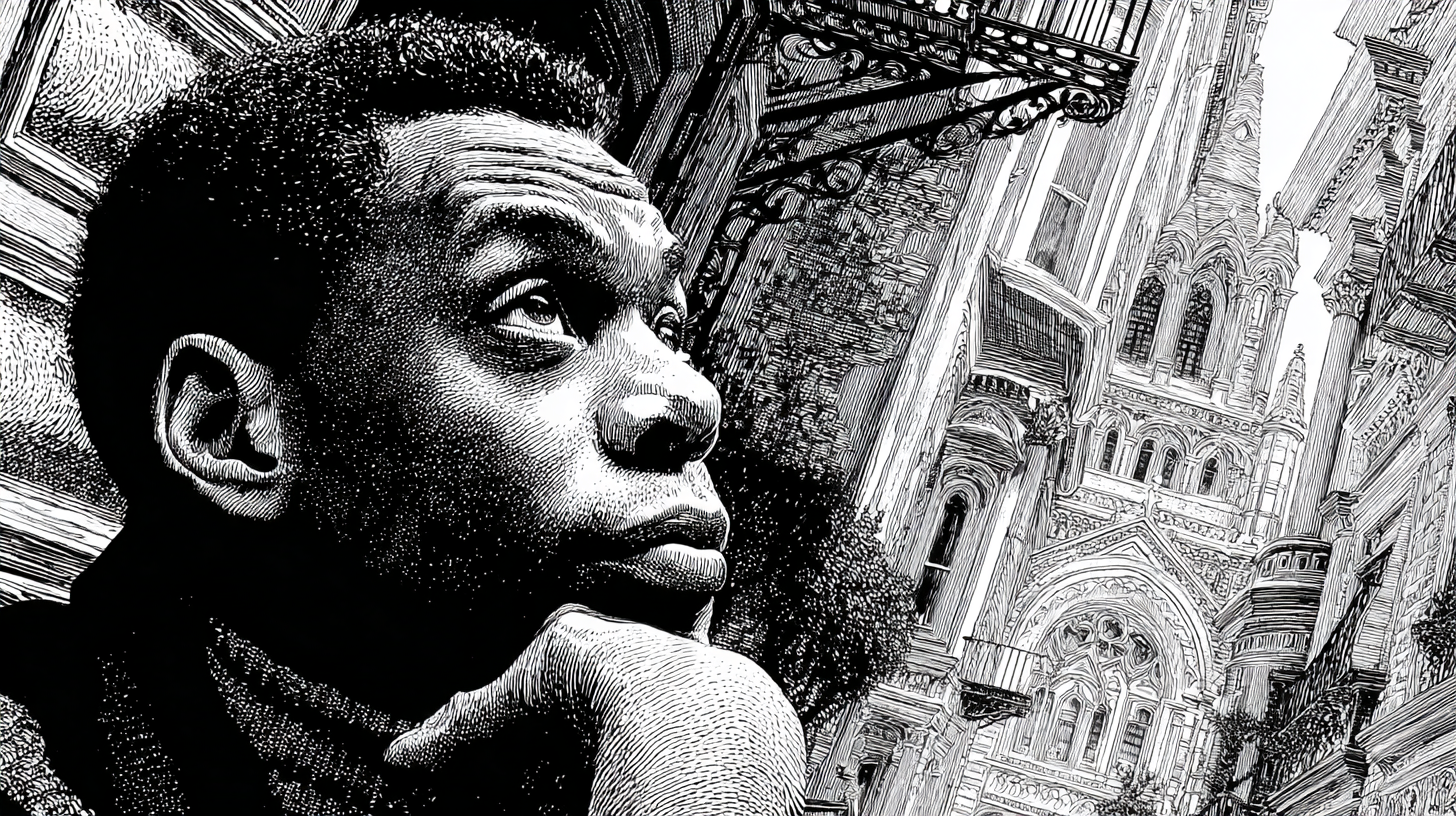
I am writing this from Harlem, where the sky this morning is clear and the air has settled at a mild twenty-three degrees, the kind of June that lies to you, that tells you nothing is wrong, that the world is merely warm and going about its business. The light comes down on the avenues as if it had never heard a single human cry. I have learned not to trust such mornings. I have learned that the brightest day is precisely the one chosen for the burying of the truth, and that a nation, like a man, does its worst work in good weather, smiling.
For the festival has come to America. The whole shouting carnival of the World Cup has descended upon this country, and the stadiums are full, and the anthems rise, and the children paint their faces in the colors of nations they will never visit. The hosts, the United States, have beaten Australia and march on into the next round, and the announcers tell us this is glory. Brazil has buried Haiti three to nothing, and a Moroccan boy named Saibari scores against Scotland in the first minutes, the fastest goal of the tournament, and somewhere a Lebanese man, with the bombs still falling around Sidon, gathers hundreds of his neighbors to watch the matches by the gate of his ruined town. I do not mock him. There is no human being alive who does not need, sometimes, to look away from the fire and watch grown men chase a ball across the grass. The need for joy is not a sin. But I have spent my life asking what a nation chooses to celebrate, and what, in the very same hour, it chooses to let die.
Because this is the hour. While the flags go up over the stadiums, the State Department of this country has decided, in an unsigned statement, that it will stop funding the programs that keep eight million South Africans alive. Eight million human beings carrying the virus, the highest number in any country on the earth, and the richest nation in history, host to the world's great game, has looked at them and turned its face away. An unsigned statement. No name on it. That is the American genius, the thing I have testified to all my life: the crime committed by everyone and therefore by no one, the death warrant with no signature, the murder that calls itself a budget. They will phase it out, they say, as though a human life were a streetlamp you could dim slowly enough that no one would notice the dark.
I want you to hold these two things in your hands at the same time, because America has always demanded that you not, has always insisted that the festival and the funeral take place in separate rooms. They do not. They are the same room. The same wealth that builds the stadium withdraws the medicine. The same hand that waves the flag signs nothing and lets the dying continue. And the genius of it is that no one in those stands will feel themselves a murderer, will feel anything at all except the pleasure of the game, because the dying are far away and dark and have always, in the American imagination, been somewhat expendable, somewhat less than entirely real.
I think this is why the news from Accra struck me so. In Ghana they have gathered and adopted a framework for reparations, an eighteen-point road map toward some accounting for the centuries of enslavement, for the debt and the theft and the bodies. The world will call it symbolic. The world calls everything symbolic that asks it to pay. But understand what is being said there: that the past is not past, that the ledger was never closed, that the wealth which raises these very stadiums was drawn up out of stolen lives and stolen continents. To cut the medicine from Africa with one hand while Africa, in Accra, presents the bill, is a kind of obscene poetry, and I have never known America to be unwilling to perform it.
And the wars go on, of course, because the wars are the one thing this country never defunds. Ukraine has sent its drones into the sky over Moscow and the refineries burn, and the men who run things call it a game changer, that ghastly phrase, as though the deaths were goals. The deal with Iran, not a week old, is already coming apart in confusion and recrimination, ceremonies canceled, allies insulted, and a man in Washington who told the world the Italian prime minister begged him for a photograph. She says it is a lie. I believe her. But notice the smallness of it, the vanity of the powerful, quarreling over photographs while the medicine is withdrawn and the camps in the Congo fill with the dead from a fever no one will name aloud.
There was one more story, and I confess it is the one I cannot put down. A boy of twelve in Ethiopia, whose beloved hen had fallen sick and would not respond to any cure, carried the bird to a hospital and tried to check it in among the human patients. They tell it as a charming thing, and the people's hearts went out to him, and so did mine. But I see in that child the whole of what we have lost. He could not conceive of a world that would let a living thing he loved simply die without someone, somewhere, being obliged to try to save it. He had not yet learned the lesson America teaches: that some lives are admitted and some are turned away at the door, that the hospital has a list, that compassion is a budget line and the budget can be cut by a statement no one signs.
The Princess in England has written this week that we are raising our children behind screens, that childhood is becoming a thing mediated by glass, and perhaps she is right. But the screen is not the danger. The danger is what we are teaching the child to feel, or not to feel, when the screen shows him eight million dying and then, without a breath between, shows him the festival, the goal, the leaping crowd. The danger is that he will learn to watch both with the same face.
I do not know how this ends. I have never known. I know only that the clear sky over Harlem this morning is the same sky over Accra and Soweto and the burning refineries of Moscow, and that we are, all of us, far more brothers than we are willing to be. The price of the ticket into this American festival has always been the same. It is paid in the blood of those not invited, and it has come due, as it always comes due, on a beautiful and innocent-seeming day.