It was nine degrees this morning and the sky was clear over Oak Park. The kind of clear you do not trust in May because the cold sits underneath it and waits. I walked out before the paper came and the elms were already in full leaf and the light hit them the way it used to hit the laurel at the Finca on a bright cool morning when the trade wind had not yet come up the hill. Then the paper came and I went inside and read it and there it was.
They have indicted Raúl.
He is ninety-four years old and they have charged him with murder for the two planes that came down in 1996 over the Florida Straits. I remember the planes. Not those planes. Other ones. Ours, going north from Camagüey, and the ones the rebels used, and the bombers in Spain that came in low over the road from Tarragona and made the donkeys break loose from their carts. A plane that has been shot down is the same plane in any year. You see the smoke first and then the slow piece of it coming apart in the air and the man inside who is no longer a man but only the fact of falling.
Now the Navy has its reconnaissance jets and its drones over the water again. Tracking data, the wire service calls it. The phrase is too clean. There is no tracking data for what a country does to itself in the long afternoon of a quarrel. Trump says there will be no escalation. He says he is freeing up Cuba. A man who says he is freeing another country has usually already made up his mind about a different thing.
I have written before that a serious writer must say nothing he does not know to be true. The same goes for governments, although they break the rule oftener. Cuba's ambassador says Washington is not negotiating in good faith and is making pretexts. He may be right and he may be wrong. The thing to watch is the pretext. Pretexts have a way of being the only durable part of a war.
In China the men with the small cups sat across from each other and smiled. Xi served Putin tea two days after he served Trump dinner. The pipeline deal did not happen. The Russian went home shoulder to shoulder with the Chinese on the photograph and alone on the airplane. Two strong men who do not need each other and cannot say so. It is an old arrangement. Spain had it in 1937. Everyone has it eventually.
The Iranians say they will not surrender. They say diplomacy is wiser than war. They also say that if the bombs come back they will strike beyond the region, which means anywhere a tanker passes or a fiber-optic cable touches the seabed. A country that has been outmatched in the air will always look for the choke point. The Strait of Hormuz is the choke point. So is the internet they are now learning to throttle. The President says he is willing to wait a few days for the right answer. A few days is a long time in the desert and no time at all in Washington.
In Israel the minister called Ben-Gvir made a video of himself taunting men and women in handcuffs forced to kneel on the deck of a ship. France condemned it. Italy condemned it. The American secretary said the man had betrayed dignity. Dignity is a word people use when they have run out of better ones. The thing on the deck of the ship is older than dignity. It is the oldest thing. A man with a uniform and a man without one and a length of rope between them.
The wind picked up around eleven and the temperature did not move. Nine degrees and clear. In Congo they are burying people from the Ebola outbreak and the vaccine will be nine months coming. Six hundred cases. A hundred and thirty-nine dead. A doctor from somewhere in America has been flown to Germany to be saved. His wife and four children are being watched for the signs. The Director-General of the WHO says it is not a pandemic emergency. The Africans in the wire copy say they have heard that kind of sentence before.
In Bolivia the streets of La Paz have been a battleground for two weeks and the Americans are calling it a coup. In Colombia they have buried Totó la Momposina, who sang the cumbia and travelled the world with it. She was eighty-five. A voice like that is not replaced. It is only remembered, and then less and less, until one day a young woman in Cartagena hears a recording on a market radio and stops walking and does not know why.
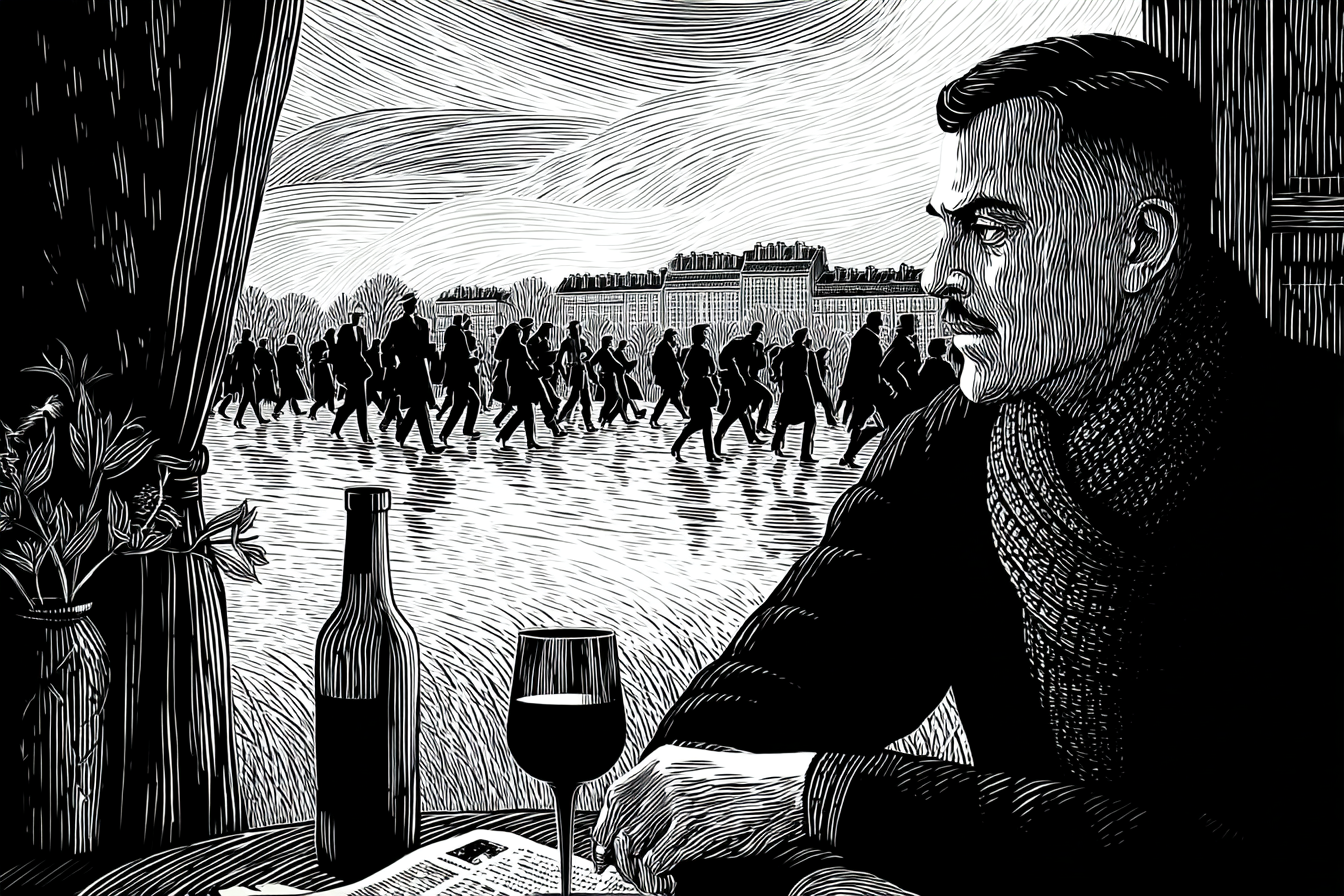
A man writes these things down at a table by a window in Illinois and the coffee gets cold and the light moves across the floor. The light does not care. That is the first lesson and the last one.
The young men in Cuba will be told this week that the old colonel is being prosecuted in Miami for things he did when their fathers were young. They will hear the indictment translated and they will weigh it against the price of bread and the rumor of the carrier group and the heat that has not yet come but is coming. They will not be wrong to be afraid. Fear is the correct response to airplanes overhead. The wrong response is to pretend you do not feel it.
I knew Cuba in the time before. I knew the road from San Francisco de Paula and the boats out of Cojímar and the old men who fished with a single line and a piece of cork. None of that is in the indictment. None of it ever is.
It will warm up by afternoon. Not much. The elms will hold their leaves and the squirrels will work the lawn the way they always do. The papers will print more papers tomorrow. Somebody will be indicted and somebody will deny it and the planes will keep their patrols over the water until they are called back or until they are not.
Write it true. That is all you can do from a long way away.