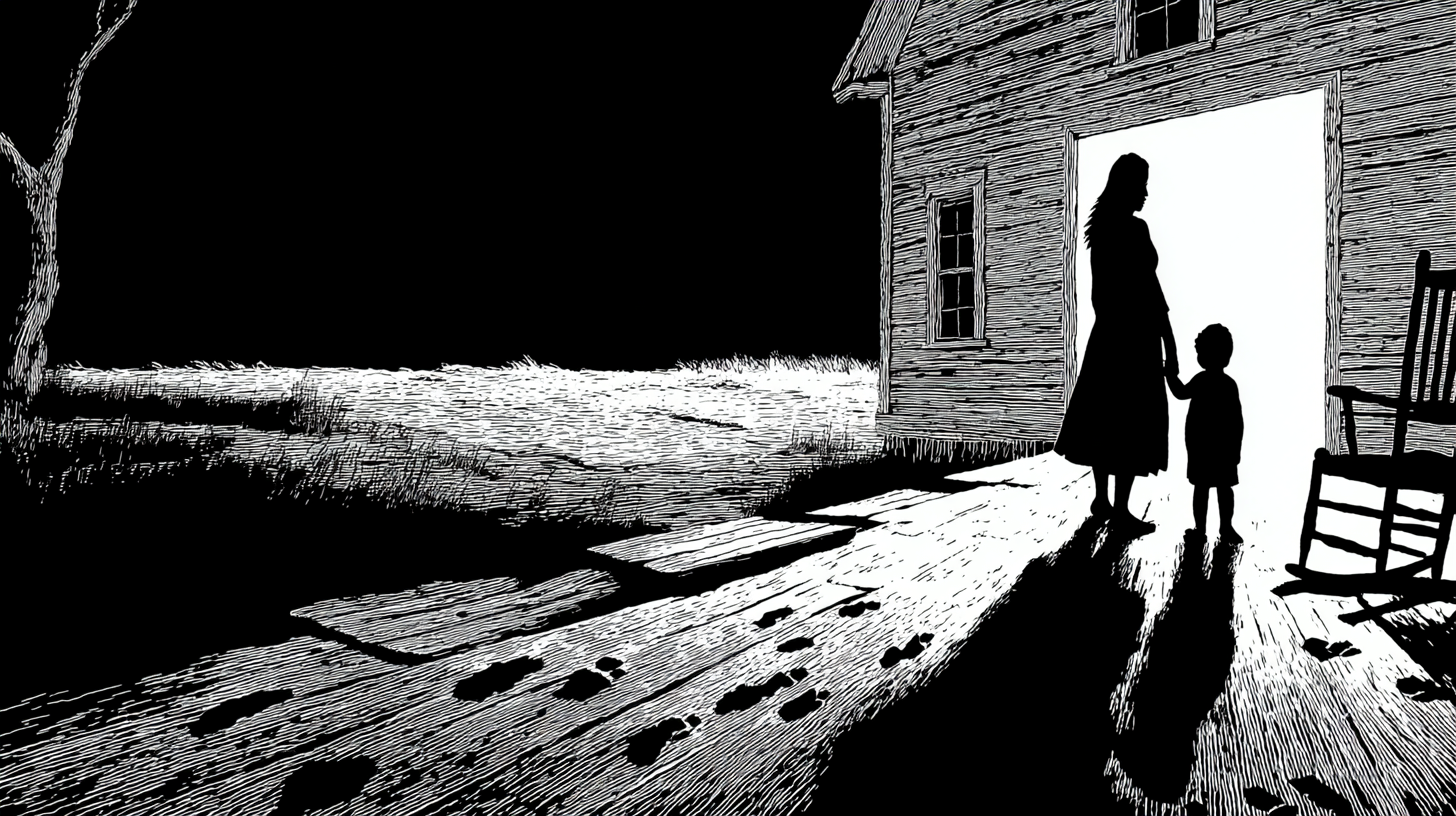
The rain came down on Lorain this morning the way grief comes down on a family: heavy, then heavier, refusing the politeness of a season. Twenty degrees by the porch thermometer and the lake the color of an old bruise. I sat at the window of the house where I was a child and watched the maples shake like women at a wake, and I thought about water. How it carries things. How nothing it touches is left unchanged.
There is news from a place called Ituri, in the eastern reaches of what white maps call the Democratic Republic of Congo. The news is Ebola. Bundibugyo, they say – a word that sits in the mouth like a stone. Five hundred suspected cases. One hundred thirty dead. The World Health Organization speaks of months, perhaps longer, and a doctor at the WHO says, with the dry restraint of people who have seen the worst, that the actual count is likely higher than what we know. It is always higher than what we know. That is the thing about the body when the body is poor and Black and far from the cameras: it dies and the dying is folded into a number, and the number gets revised.
A woman in Beni told a journalist: Ebola has tortured us. Tortured. The word is not metaphor. The word is what a mother says when she has washed the same hands too many times and still buried the child. I think of the women who taught me what a kitchen is for. I think of how the body learns danger through the work of carrying others.
And here, across the long lake of the Atlantic, the Secretary of State of my country has decided that the WHO was a little late in naming the thing. A little late. As though the dying could be timed with a kitchen clock. As though the calendar of an epidemic answers to State Department memos. He says this while his government cuts public health to the bone, and somewhere a child in Bundibugyo coughs into her grandmother's lap and the grandmother does not yet know which of them will be next.
The newspapers are full of men this morning, and the men are full of weather of their own. In Beijing, Xi Jinping receives Vladimir Putin in the great hall, three days after the American president left the same red carpet. Russia, weakened, looks east for oil it cannot sell west. China, watchful, calculates the seasons of empire. Across the Persian Gulf, the bombs that fell last week have not yet stopped echoing. The American Vice President says we are locked and loaded. The American President says he would prefer to end things in a very gentle manner. Iran says it has surprises.
I have lived long enough to know what gentle manners cost. The polite voice on the radio, the smiling envoy with a basket of cookies for Greenland, the press conference that ends before the question is finished. Gentleness in the mouths of men with weapons is not gentleness. It is a stage direction.
The United States Senate, to its modest credit, has voted to advance a War Powers Resolution to limit the President's hand. A rare rebuke. The vote will go where votes go: into the record, into the wind, into the next news cycle. But somebody had to stand up and say not in my name, and that somebody had a name, and the name will be remembered by a child who is not yet born.
The hardest story arrived from Kabul. Three in four Afghans, the BBC writes, cannot meet their basic needs. Fathers are selling children. The phrase sits there on the page as though it were ordinary syntax. Fathers are selling children. I read it twice. I read it three times. I want to refuse the sentence the way you refuse a casserole at a funeral – politely, but with your whole body. And still the sentence stays. Still the fathers stay. Still the children, who do not know yet that the word daughter can be a price.
What does the man do, after? Where does he put his hands? My grandmothers had a saying: Some loads you carry, and some loads carry you. That father is being carried now, down a road none of us can walk for him.
In Washington, meanwhile, the IRS has agreed not to pursue the President for back taxes. His family has been granted immunity from pending audits. The headline is small, almost decorous, tucked between the war news and the football scores. And in another paragraph: the United States will admit ten thousand additional white South Africans as refugees, on the grounds of an emergency refugee situation that no honest map describes. The cost: one hundred million dollars. The cost: a country's word about who belongs.
I have spent my life writing about the long American habit of choosing who is a refugee and who is a problem, who is a citizen and who is cargo. The habit has not been broken. It has only changed its shoes.
In San Diego, a security guard named Amin Abdullah, father of eight, was killed defending a mosque from a man with a gun. A shining light, they said. The light went out, and his eight children inherited the darkness, and the country added one more name to the list it does not read aloud.
The rain has not stopped. It has only changed its rhythm – patient now, the way water becomes patient when it has decided. I think the rain knows things the news does not know. The rain knows that the oil burning at Tuapse on the Black Sea coast is the same oil that pays for the drones that are shot down over Estonia, that the smoke from a refinery and the smoke from a mortuary are kin, that everything we do to the earth the earth remembers, and remembers, and remembers.
What I want to say to you, reader, on this gray Wednesday in May, is small and old and stubborn. The body is the first nation. The neighbor is the first border. The child is the first headline. Anything else we are told is a story written by people who do not have to bury anyone.
The maples are still shaking. Lake Erie has its mood on. Somewhere a grandmother in Beni is humming through a mask, and somewhere a father in Kandahar is not sleeping, and somewhere – here, perhaps – a woman is sitting at a window writing this down because she has not yet found a better use for the morning.
Tomorrow, the rain will lift. The work will not.