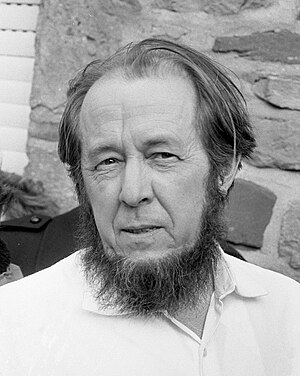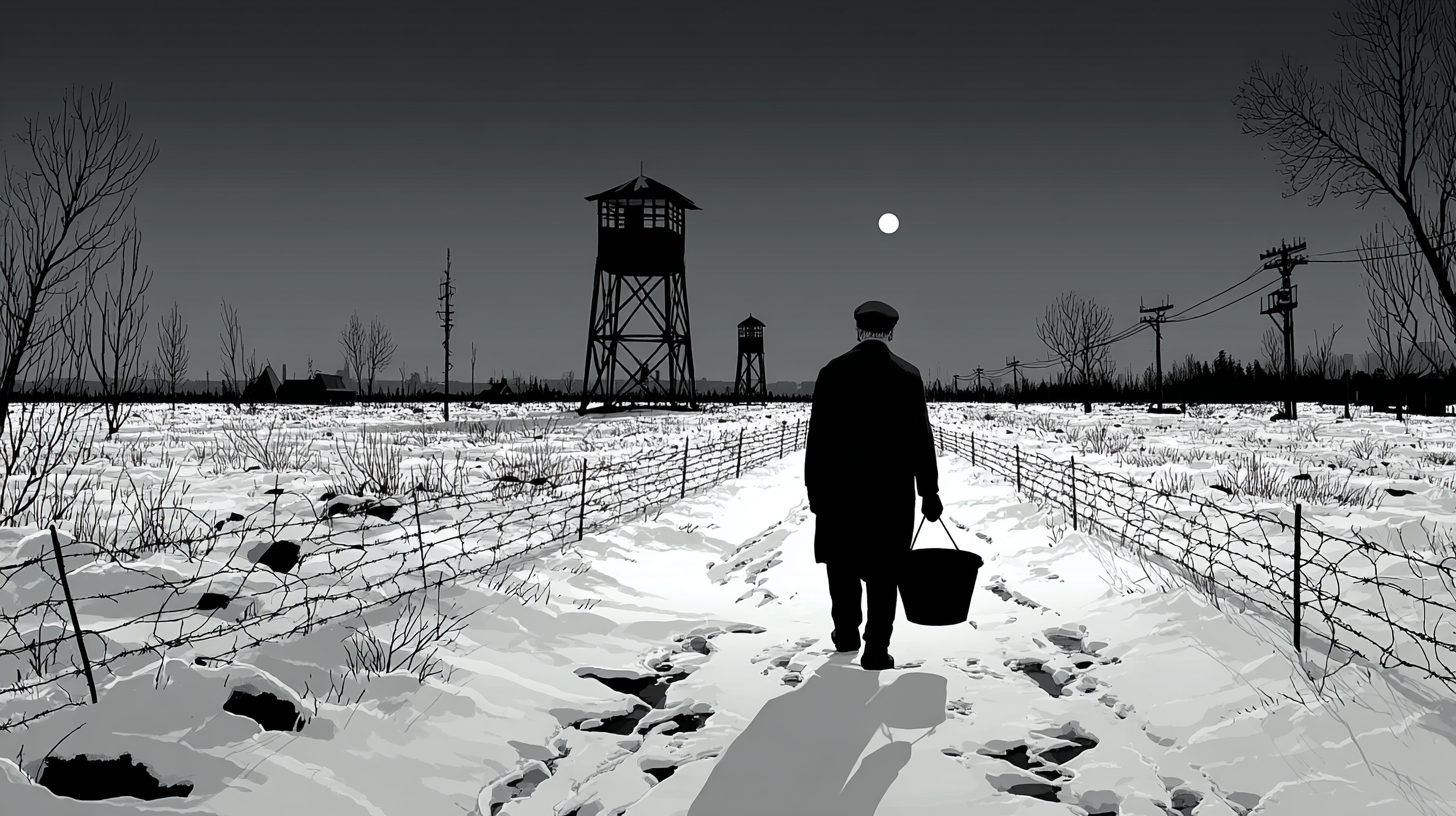
This morning the snow falls heavy upon Kislovodsk, my city, the city of my birth in 1918, when one empire was dying and another, more terrible, being born. The thermometer reads one degree above freezing, and the white sky has descended without mercy upon the rooftops, upon the cypress trees of the resort park, upon the small graves of those who never returned from the camps. April. They call this April. The calendar lies, as calendars often do.
I sit and read the dispatches that arrive over the wires of the world, and I am reminded again that the chief disease of our age is not war, nor hunger, nor even the bomb that hangs above us all. The chief disease is the Lie. Not a lie. The Lie itself, official and uniformed, stamped with the seal of states.
In the Strait of Hormuz, two ships are seized by the Revolutionary Guard of Iran. The Iranians release a video to prove the seizure. The American president declares that this is not a violation of his ceasefire. The Iranians say the strait is closed; the Americans reply that the Iranians do not control it. Each side sends out its truth like a paper boat upon the oily water, and each side knows, knows in the cold marrow, that the other is lying, and that they themselves are lying, and that the only people who do not lie are the sailors locked in those hulls, who have no microphones, no spokesmen, no flag.
I have lived long enough to recognize the shape of this exchange. It is the same shape that lay across the interrogation room of the Lubyanka in 1945. Two parties stare at each other across a table; both know what has happened; both pretend they do not know. The pretense itself becomes the only currency. And meanwhile in Frankfurt, Lufthansa cancels twenty thousand summer flights because jet fuel has surged. The price of the Lie is paid, as always, by those who never told it: the holidaymaker, the engineer, the grandmother who wished to visit her grandchildren in Munich. The bookkeeping of empires is settled in their pockets.
A new law in Moscow forces the Ukrainians of Mariupol, of Donetsk, of Luhansk, to accept Russian title to their own homes, or to lose them. I read this and my hand begins to tremble, and the tremor is not from age. I have seen this exact paragraph before, in another decade, in another decree. The 1944 deportations of the Crimean Tatars; the dispossession of the Volga Germans; the cattle cars to Karaganda. Always the same legal language, always the same bureaucrat behind the same desk, always the same printed form that asks the householder to sign away the wall against which his father leaned, the floorboard upon which his daughter took her first step.
The wisdom of tyranny is patient. It does not need to murder a people if it can persuade them to surrender their address. A man without a deed becomes a man without a country, and a man without a country becomes, in the special vocabulary of the East, an "element to be relocated."
I write this from Kislovodsk, in Russia. I am Russian. I love my country with the love that hurts. And it is precisely because I love it that I must say: this law is a stain. It will not wash out in our lifetime, nor in our children's.
In southern Lebanon, a so-called double-tap strike kills the journalist Amal Khalil and wounds her colleague Zeinab Faraj. A double-tap: the second missile is for the rescuers, and for the witnesses. There is no military objective in killing a witness; the killing is itself the objective. To extinguish the eye that saw. To erase the testimony before it can be filed.
In every century the dictator's first enemy is not the rival army but the diary, the photograph, the dispatch. I know this because I spent eight years writing on scraps and cigarette papers, hiding pages in the lining of my prison coat. The state does not fear bombs as it fears the witness. A bomb, after all, can be denied. A photograph cannot.
In Equatorial Guinea, in a port-city prison whose name the world will forget by Friday, Pope Leo stands among the inmates and tells them that life is not defined solely by one's mistakes. I do not belong to the politics of his church, but I salute the gesture. To enter a prison voluntarily, to look the prisoner in the eye and say: you are still a man. This is, in the cold accounting of the twentieth century, no small act. The Gulag was filled with men who were never visited, never named, never spoken to as men. To name the prisoner is to begin to undo the prison.
Meanwhile, in Paris, the G7 quietly removes climate change from the agenda of its meeting, the better not to upset Washington. So a list of words is shortened, and a continent of fires lengthened. The omission is the Lie in its most modern form: you do not need to deny a thing if you can simply refuse to mention it. Silence, too, is propaganda. Perhaps it is the most efficient propaganda of all, since it leaves no fingerprints.
Brussels approves a loan of ninety billion to Ukraine; the Druzhba pipeline (the word means Friendship, a name that has aged into one of history's bitterest jokes) is turned on once more. Washington withholds Baghdad's own oil money to discipline it for being friendly with Tehran. An envoy of the American president asks FIFA to remove Iran from the World Cup and substitute Italy, as one might exchange a guest at a dinner party. The casual cruelty of the powerful: not the cruelty of hatred, but the cruelty of inattention, of treating a nation of ninety million souls as a name to be crossed off a roster.
I watch the snow fall on Kislovodsk and I think of the football pitches of Tehran, of Tabriz, of Isfahan, where boys are kicking a ball in the dust and dreaming of June. They will not know, perhaps, that an unelected envoy has discussed their absence over coffee.
What is left, then, for the ordinary man, in such a year? Only the old, simple, intolerable instruction. Live not by lies. Do not write the falsehood, do not sign the falsehood, do not nod at the falsehood when it is spoken in your presence. Do not, and this is the hardest, allow yourself to grow accustomed to it.
The snow on my window is not a metaphor. It is one degree above freezing, and the wind from the Caucasus is bitter, and the cypresses stand in white surplices like a procession of priests too tired to chant. Spring will come. It will come because the earth has its own honesty, which no decree can repeal. But it will not come of itself. It will come only because, somewhere, someone refused to repeat the sentence he was told to repeat.
That refusal – that small, ridiculous, world-saving refusal – is all that we have. It is enough.