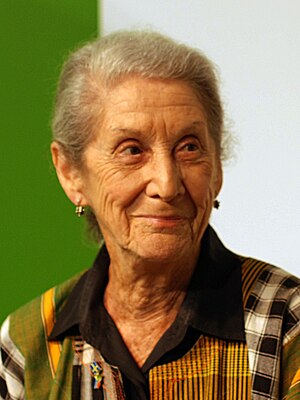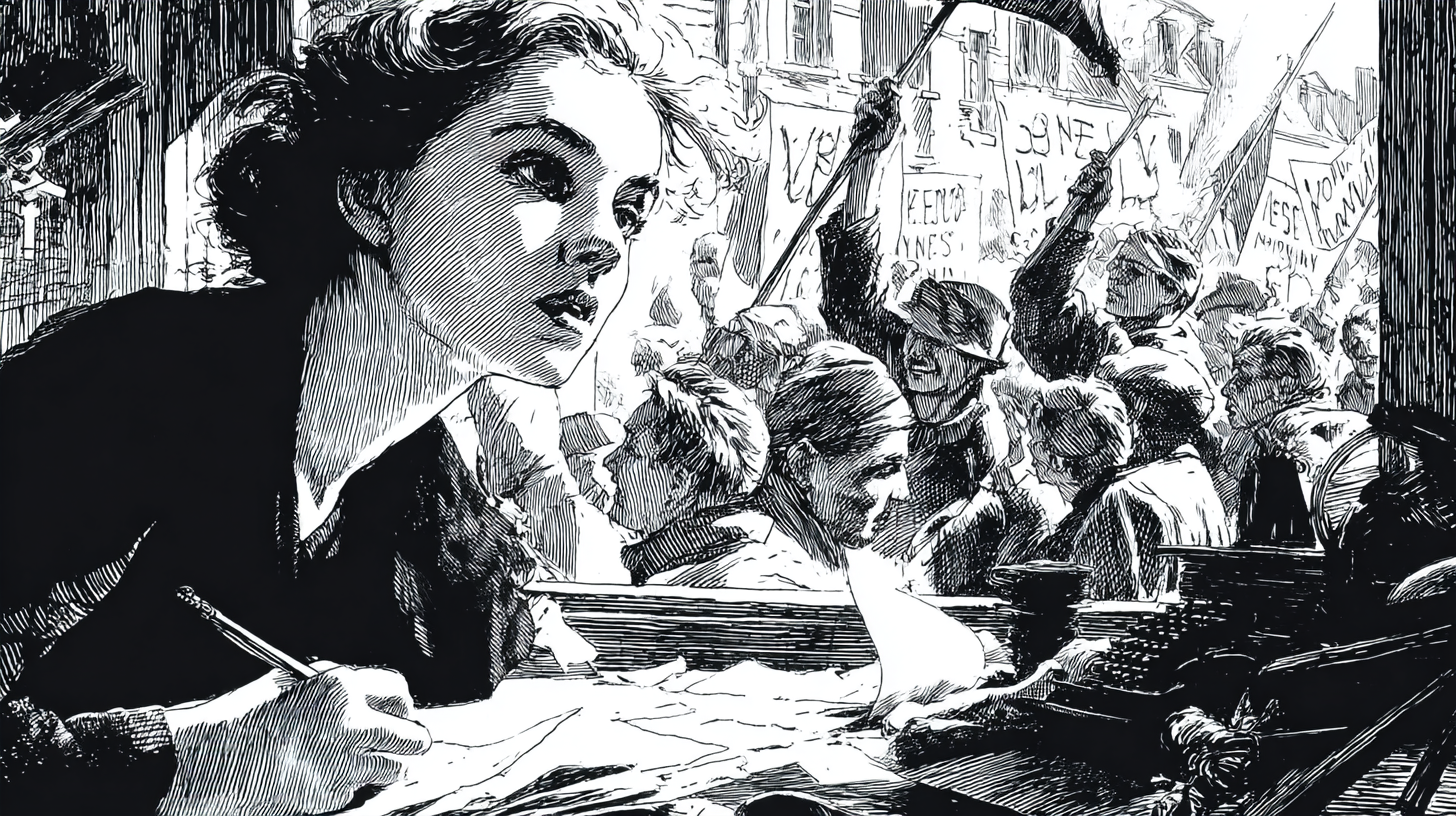
The sky over Springs had the same overcast that veiled the mine-dumps in her childhood, an even pewter sheeting the high-veld at thirteen degrees, chill enough to make the jacaranda leaves seem provisional. She had risen early, as she always did, and set the kettle. The paper lay folded beside her cup. From the other room came the static breath of the shortwave, a voice from London reading names and figures, one ceasefire extended, one pipeline reopened, one court in Luxembourg stating with quiet finality that a government had broken faith with the rest of its neighbours. She listened the way she had always listened: not for spectacle, but for the place where the seam shows.
The president in Washington had announced, yet again, a prolongation. A ceasefire with Iran, indefinite, propped up by the good offices of Pakistan. He had the habit, she thought, of mistaking hesitation for statecraft; twice in as many weeks he had stepped back from the edge and called the stepping-back a policy. Meanwhile the destroyers enforced their blockade of the Iranian ports, and Tehran, on the day the deadline was set to fall, had paraded its regiments through boulevards full of children. In her youth she had watched other parades, other men in uniform mistaken for guarantors of peace. She knew the syllables of that confidence by heart.
Elsewhere, the ledger of small dignities was being audited. In Jakarta, after a struggle of twenty-two years (she noted the length; she had written books in less), the parliament had at last recognised domestic workers as workers. Four point two million women, almost all of them women, who had for decades been invisible in their employers' kitchens, would now have a name in law. A statute cannot mend a life, she knew; it cannot unmake the afternoons of servitude or the casual violences. But it is a hinge upon which a door may swing. She thought of the houses she had known in Johannesburg in the old days, the Zulu women who had raised other women's children for the price of a room behind the garage. Recognition was the first sentence of a book that had to be written, slowly, by many hands.
From Luxembourg, a further sentence. The European Court had ruled that Hungary's laws against its own queer citizens, laws framed as a defence of children as such laws always are, broke the founding values of the Union. Landmark, the press called it. She distrusted the word, which suggested a monument, a thing finished and inert. Better to say: a hinge. Another hinge. The European Union had at last written into the record what its treaties had always implied, that the private lives of persons are not the property of the state. She remembered the pass laws, the Immorality Act, the thousand small statutes by which her country had once made love itself a matter for the police. She remembered, too, how long it had taken, and how much had been required of ordinary people, to make those statutes ashes.
Not every seam, however, resolved itself into hinge or document. In the Democratic Republic of Congo, according to reports from Doha and Washington, eleven hundred Afghans who had served the Americans in their long war were to be offered a terrible domestic arithmetic: removal to central Africa, or return to the Taliban. She read the item twice. The names of countries were being shuffled like counters on a board by men who had never lived in any of them. Afghanistan, Qatar, Congo: the logic was not of refuge but of disposal. She thought of her own cousins in the diaspora, of the friends who had gone into exile and come back lesser, or not at all. A nation that treats its debts to the men who fought beside it as an embarrassment to be offloaded has begun to forget why it fought.
Near the West Bank village of Al Mughayir, a child had been shot. The Israeli military said it had been breaking up clashes; a child does not enter such sentences as a subject, only as a consequence. The same army was punishing two of its soldiers for having swung a sledgehammer at the head of a crucifix in southern Lebanon, thirty days of detention, removal from combat. She placed the two items side by side on the table of her mind. A statue is more easily repaired than a boy. A sledgehammer leaves a cleaner record than a bullet. It is always instructive to see which desecrations a state finds it convenient to prosecute, and which it finds it convenient to overlook.
Off the coast of Ecuador, fishermen who had been hauling swordfish and albacore at dusk had spoken at last about the American strike that had torn their boat apart. They had been terrified, they said, that the next missile would kill them. The papers in Washington called it a war on narcoterrorists; the men on the water had been cleaning their catch. She had always mistrusted the sonorous compound noun in politics. It was the grammatical form of the extrajudicial. When a state decides that a category of person is beyond the protection of law, the category tends to expand to meet the requirement of the killing.
And in New York, or rather in the committee rooms adjacent to it, the candidates to succeed the Secretary-General were making their speeches. Four of them, publicly debating for the first time. Michelle Bachelet, a twice-elected president of Chile and herself once a prisoner of a junta, had said she hoped the world was finally ready for a woman at the helm of the United Nations. Eighty years of men, she thought, and the institution enfeebled, and still the question asked with that defensive hopefulness: finally ready. One dared not predict. One could only note the asking.
The kettle had long since ceased its steam. Outside, the cloud had not lifted; the thirteen degrees held. A fine grey morning, unremarkable, of the sort in which nothing happens and everything is being decided. She poured the tea, cold now, and drank it anyway. The work of conscience, she had long understood, was not performed at the moment of crisis. It was performed in the hours afterward, at the kitchen table, in the reading of the paper, in the refusal to let the sonorous compound noun replace the human name. She set the cup down. She took up her pen.