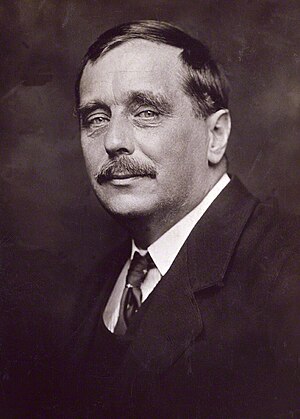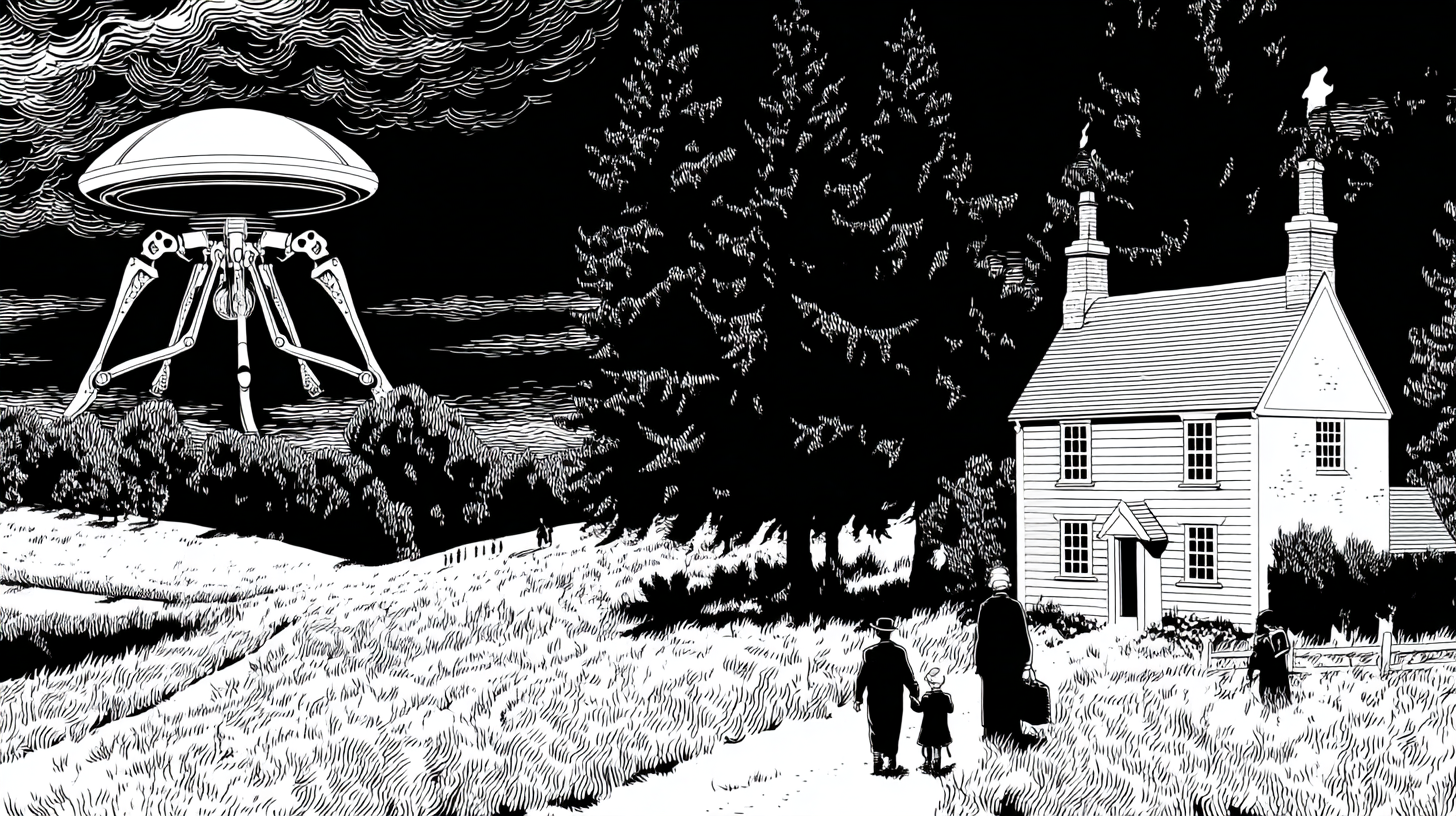
The thermometer in my window has settled at four degrees, and the Kentish sky is perfectly clear. A clear sky over Bromley is a deceptive gift. It suggests that everything can be seen plainly, that the world is a transparent apparatus and we have only to read its dials. But the news arriving this Friday morning is precisely the opposite kind of thing: a dense, smoke-darkened instrument panel in which every needle quivers at once, and the oldest questions of our species insist on being answered under new names.
Consider, first, the Strait of Hormuz. A narrow corridor of salt water, scarcely more than a gap in the rocks when one contemplates it from the moon, and upon it hangs the price of bread from Hamburg to Hyderabad. Oil has risen above one hundred and six dollars a barrel. The American president announces that vessels will require the permission of his navy to pass, and the Iranian commanders counter with masked seizures of merchant ships, their cameras rolling, their footage (according to patient analysts) edited hours after the fact. It is a scene I might once have invented, and I would have been accused of melodrama. Here it is, reported in sober type, by wire services from half a dozen capitals.
I am struck, as I have always been struck, by the sheer provinciality of the men who arrange these convulsions. An Israeli defence minister speaks cheerfully of returning Iran to the Stone Age, as if the Stone Age were a postal district one could ship one's enemies to by return of steam. The man who speaks this way is not a barbarian; he has read books, received briefings, dined on linen. Yet he imagines history as a lift that travels only downwards, and supposes that the operation of pressing the button costs nothing to the operator.
There is a second strait in this morning's papers, wider and more mysterious than the first, and we have not yet given it a name. It is the channel through which the mind of the species now flows, increasingly, in silicon. Meta proposes to dismiss eight thousand workers. Microsoft offers early retirement to nearly as many. Both firms, we are told, must economise because the building of artificial intelligences has grown so ruinously expensive. The White House, meanwhile, publishes a memorandum accusing Chinese firms of distilling the American machines: an exquisite verb, borrowed from the chemist, which describes the quiet extraction of essence from substance. One enterprise spends hundreds of billions to teach a machine to think; another, for a small fraction, teaches a second machine to think like the first. The second machine does not know it is an imitation. Neither, one begins to suspect, does the first.
I confess I find the picture less alarming than the commentary suggests, and more melancholy. A generation ago we were promised the age of leisure; what has arrived is the age of redundancy, which is a harsher cousin. The eight thousand clerks and engineers of Menlo Park will not retire to orchards. They will compete for places in firms that are themselves contracting, in cities whose rents assume they did not. The mills of Lancashire went down in my youth in much the same fashion, and the fact that the new mills produce not cotton but sentences, not calico but conversation, does not alter the essential human arithmetic. A man displaced is a man displaced, whether the loom that replaces him is of iron or of code.
Observe, then, how the two straits connect. The chief executive of Palantir, a firm I should dearly like to have invented for the purposes of satire, has just issued what his admirers call a manifesto upon the changing face of war. War, in his telling, is to become cleaner, swifter, more algorithmic. Boeing's defence division, the wire reports, has turned a handsome profit on a fresh contract from the Pentagon worth two and a third billion dollars. Meanwhile the European Union formally approves a loan to Ukraine of ninety thousand million euros, the greater portion of it earmarked not for schools or hospitals but for shells and aircraft. A continent that has, within living memory, piled its dead in trenches now concludes, without apparent embarrassment, that the future requires more of the same, only tidier.
I have watched this particular reflex all my life. In 1914 it was called the defence of civilisation. In 1939 it was called the defence of civilisation. It is called the defence of civilisation this morning also. One might suppose a species capable of distilling machine intelligences from one another might also distil, from a century of slaughter, the single useful instruction: stop. But that distillation, apparently, is too subtle for our apparatus.
And then, almost as a footnote: a great block of ice has detached itself somewhere on Everest and is obstructing the climbing route in the busiest season. The Sherpas cannot prepare the path. A small item, set amid the geopolitics. And yet here, surely, is the true headline. The mountain is clearing its throat. The planet, patient beyond our imagining, has begun the slow rearrangement of its furniture, and we continue to argue in the parlour over the deeds.
Pope Leo, touring Africa, remarks that migrants and refugees are being treated worse than house pets. He is scolded for the comparison. I confess I do not see why. A house pet, at least, is allowed to remain in the house. The Afghans who served American arms are now offered passage to the Congo, or, failing that, a dignified return to the Taliban, a choice, the report observes, between bad and worse. A Kuwaiti-American journalist has been released after fifty-two days in a cell for the crime of posting his thoughts. Bulgaria has elected a friend of Moscow and waits to see which way he will face. These are not separate stories. They are the same story, told in different accents, by the same narrator: the old narrator who does not yet know he is in a new book.
I return to my window. Four degrees, still; the hedges black against a sky as clear as a lens. Somewhere above Bromley a satellite is passing; somewhere below it, a tanker; somewhere inside it, a computer that is learning, at this moment, to draft a sentence not unlike this one. The project of the twentieth century, I had hoped, would be the gradual construction of a common sense, a World Brain, if you will permit an old man his phrase, by which we might at last coordinate our affairs without recourse to ruin. We have built the brain. We have not yet decided to use it. That decision, dear reader, is still ours to make, though the hour is late and the thermometer is falling.