It is a truth universally acknowledged that a nation in possession of a good army must be in want of a war. And yet when the thing is actually got, when the cannons have been wheeled out and the treasury drained and the diplomats sent home with nothing but their luggage and their indignation, how quickly does the possessor discover that ownership is a far less comfortable business than desire.
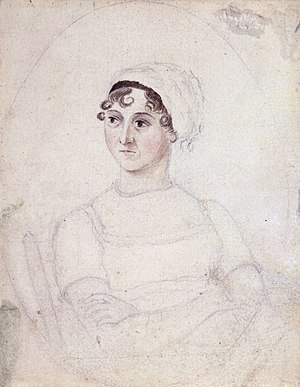
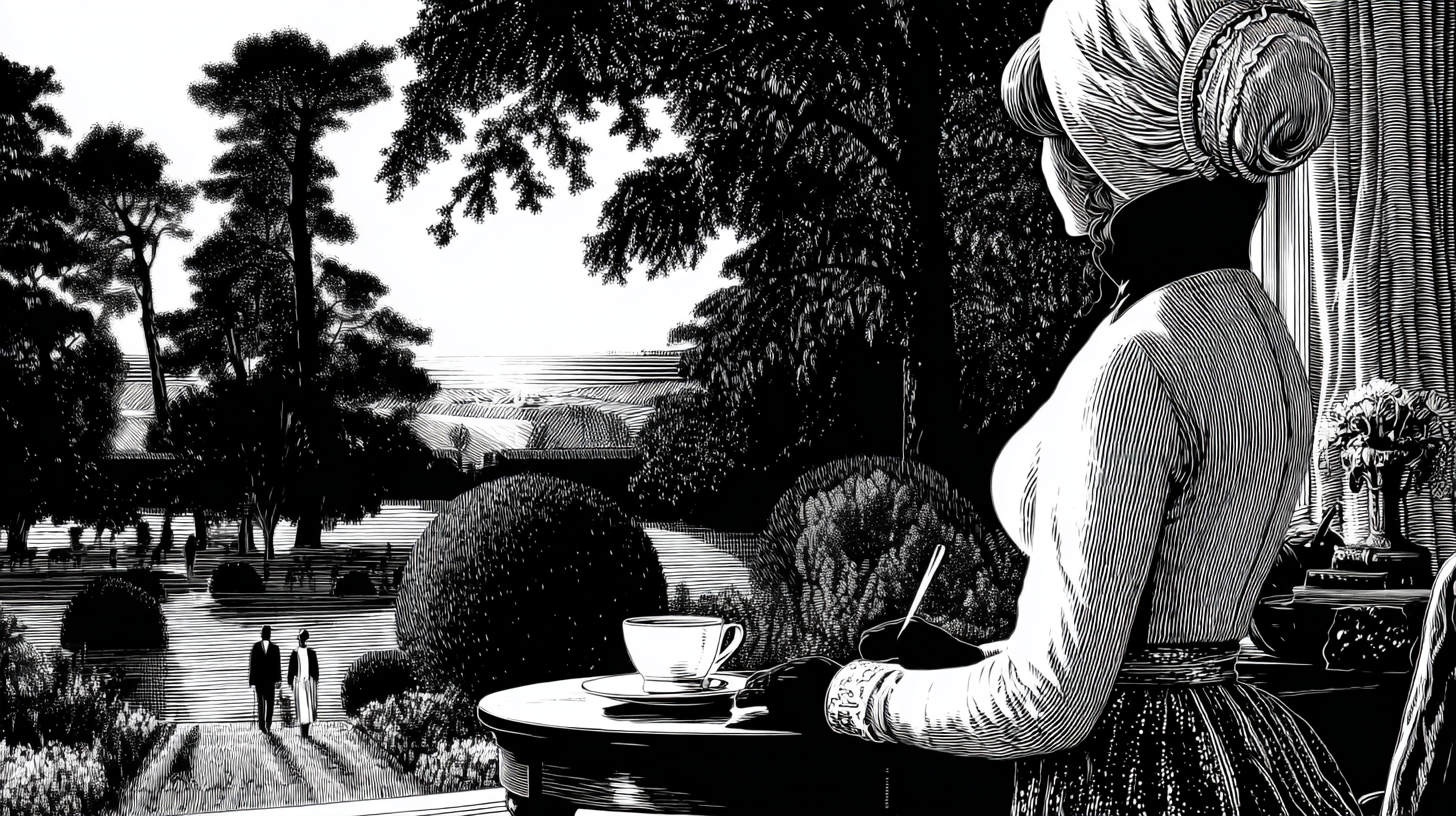
The morning mist hung low over Hampshire, the thermometer confessing to no more than three degrees, and the fields about Steventon lay shrouded in that particular English obscurity which makes it impossible to determine whether the day intends to improve itself or has already given up the attempt entirely. It was weather that invited one to remain indoors with a fire and a novel, and to consider the world only at a safe epistolary distance: which is, I have always maintained, the ideal proximity from which to regard the doings of great men.
From such a vantage, one learns that Mr Trump, a gentleman whose acquaintance with restraint is of the most passing nature, has declared upon his social media that he is considering a "winding down" of the American campaign in Iran. This intelligence arrived scarcely hours after he had informed the assembled press, with every appearance of satisfaction, that he had no interest whatever in a ceasefire, as the United States was "obliterating the other side." One is put in mind of Mr Collins, who could announce his humility and his condescension in a single breath and perceive no contradiction. That a man might simultaneously boast of obliteration and hint at withdrawal speaks not to any change of heart but to that species of vanity which requires the world to believe one capable of both war and peace, and answerable to neither.
Meanwhile, the people of Iran have been attempting to celebrate Nowruz, their ancient new year (a festival of renewal some three hundred million souls observe), under circumstances that render renewal a particularly bitter aspiration. The reports tell of bombardment and fear, of families gathering at the haft-sin table while the walls shudder, of spring arriving to a country in which nothing else is permitted to begin. One need not have travelled farther than Bath to recognise the universal human talent for carrying on with the rituals of ordinary life whilst everything around one collapses. Indeed, it is our most admirable quality, and our most heartbreaking.
The effects of such martial enthusiasm have not confined themselves to the combatants. Across Southeast Asia, in Thailand, Vietnam, and the Philippines, the price of fuel has soared to heights that would make a Regency coal merchant blush. The Strait of Hormuz, that narrow passage upon which so much of the world's energy depends, has become a theatre of such hazard that the cost of merely existing (of cooking one's rice, of driving one's goods to market) has risen beyond the reach of millions. In India, textile workers have been obliged to abandon their looms and return to their villages, their cooking gas exhausted by a crisis that began in a country most of them could not find upon a map. It is the particular cruelty of modern warfare that its worst privations are visited upon those who have the least say in its prosecution and the least means of escaping its consequences.
But let us turn, as one must for the preservation of one's spirits, to matters closer to the drawing room.
In Paris, the Socialists are battling to retain the mayoralty, with a Monsieur Grégoire contending against a Madame Dati in a contest that has all the elegance and venom of a quadrille danced by two partners who cordially detest one another. The opinion polls favour Grégoire, but as any reader of fiction knows, the candidate who appears most secure in Chapter Two is rarely the one who triumphs in Chapter Three. France has always understood that politics is theatre, and that the audience reserves its warmest applause for reversals.
Across the Atlantic, a jury in San Francisco has determined that Mr Elon Musk, a gentleman of considerable fortune and even more considerable opinions, misled the investors of Twitter during his acquisition of that enterprise. The finding surprises no one who has followed Mr Musk's career with any attention, for he has long conducted himself with the breezy assurance of a man who believes that wealth is a sufficient substitute for candour. In my experience, it never is. The rich may purchase silence, convenience, and the appearance of friendship, but they cannot purchase the good opinion of a jury, which is, one supposes, the nearest thing America has to a village.
From Norway comes a tale that might have furnished a novel, had circumstances been rather less distressing. Crown Princess Mette-Marit has broken her long silence to declare that she was "manipulated and deceived" by the late Mr Epstein, a man whose talent for insinuating himself into the lives of the powerful was matched only by the horror of his crimes. The princess wishes she had never made his acquaintance: a sentiment one may credit entirely, for in the matter of regrettable connexions, royalty suffers more acutely than the rest of us. The rest of us may drop an inconvenient acquaintance; a princess must explain it.
And then, amidst all this human turbulence, a piece of intelligence that restores one's faith in the persistence of beautiful things: in Mexico, the population of monarch butterflies has increased by sixty-four per cent. These extraordinary creatures, who migrate thousands of miles on wings no thicker than a prayer, have covered a greater area of forest than at any time since 2018, despite every threat that habitat loss, pesticides, and the general human talent for destruction have contrived to throw in their path. It is the sort of news that makes one suspect Nature of possessing a sense of irony, for just as the world's leaders demonstrate their genius for ruin, the butterflies quietly demonstrate their genius for survival.
The mist has begun to thin over the Hampshire lanes, though one would not go so far as to call the result sunshine. It is merely a lessening of obscurity: which, come to think of it, is the most any newspaper can honestly promise. We cannot offer clarity. We can only suggest that the fog is not quite so thick as it was yesterday, and that somewhere, beyond the grey, the butterflies are managing.