One of the minor facts about the present war in Iran (a fact that would strike any observer as remarkable if he had not already been numbed by repetition) is the sheer velocity with which the official vocabulary shifts. On the nineteenth of March, the Israeli prime minister announced that his country had "acted alone" in attacking an Iranian gas field. On the same day, the American president declared he would do "whatever was necessary" to lower oil prices, and his Treasury secretary floated the notion of lifting sanctions on Iranian oil already at sea. To hold both propositions in one's mind simultaneously, that Iran must be destroyed and that its oil must flow, requires a kind of mental gymnastics that would have been considered extraordinary twenty years ago. Today it passes without comment.
I mention this not because the contradiction is novel, but because it illustrates something about the way power now operates in the open. There was a time when governments at least troubled themselves to maintain consistency between Tuesday's pronouncement and Wednesday's. That time has passed. The Israeli strikes on Tehran continue even on Nowruz, the Persian New Year, which is roughly equivalent to bombing Westminster Abbey on Christmas morning: a fact noted in dispatches but not dwelt upon, because to dwell upon it would be to acknowledge that Iranians celebrate holidays, that they are, in short, human beings with calendars.
Meanwhile, in the Strait of Hormuz, approximately twenty thousand sailors sit trapped aboard their vessels while the International Maritime Organization drafts evacuation plans. Nearly a hundred ships have passed through the strait since the start of March, which sounds like a great many until you consider that, in peacetime, something like sixty pass through daily. The blockade is, in effect, a siege: not of a city but of a waterway, and by extension of the global economy. Gas prices are soaring. European leaders gathered in Brussels to discuss jump-starting the EU economy, only to find the war had swallowed the agenda whole. Orbán blocked a ninety-billion-euro loan to Ukraine. The energy crisis of 2022, which people had begun to regard as a historical event, is repeating itself with the dogged predictability of a metronome.
It is worth pausing here to consider what happens to language when war becomes permanent – or at least when the intervals between wars become so short that no one can quite remember what peace felt like. A report published this week by a human rights organization found that press freedom in the United States has fallen to its lowest recorded level. The causes cited include the concentration of executive power and the dysfunction of Congress. One might add that when a government is simultaneously waging war in the Middle East, threatening to invade Greenland, and detaining seven-year-old Canadian children with autism in Texas detention centres, the question of press freedom becomes somewhat academic. The information is available. It is simply that no one appears to do anything with it.
The case of the Canadian mother and her daughter is, in its small way, as revealing as any geopolitical manoeuvre. The family presented a valid visa at the border. They were detained anyway and placed in the notorious Rio Grande Valley facility. The child is seven and has autism. One imagines the immigration officers had their reasons, filed their paperwork, followed their procedures. The machine processed its inputs and produced its output. That the output was a frightened child in a concrete room is, from the machine's perspective, beside the point.
Denmark, we now learn, had drawn up plans to destroy airfield runways in Greenland in the event of an American invasion. This was prompted by the US operation to seize Venezuela's leader, which apparently concentrated certain European minds wonderfully. That a NATO ally should be making contingency plans to sabotage its own territory against another NATO ally is the kind of detail that belongs in a satirical novel, except that satirical novelists have been out of business for some time now, reality having made them redundant.
In Tehran, the national women's football team received a hero's welcome, while the men's player Sardar Azmoun was expelled from the national squad for "disloyalty." The offence was an Instagram photograph taken with Dubai's ruler. In Britain, the government announced that victims of the Post Office scandal – in which hundreds of sub-postmasters were falsely prosecuted on the basis of faulty software supplied by a Fujitsu subsidiary – would see compensation extended to their families. In Pakistan, farmers who lost everything in the 2022 floods are suing two German industrial companies for the emissions that intensified the deluge. And in Chile, an archaeological discovery at Monte Verde has upended, once again, the established theory of how human beings first populated the Americas.
I list these items not because they are connected (they are not, except in the sense that everything that happens on any given day is connected by the fact of happening on that day) but because the range itself tells us something. The world is not merely chaotic; it is chaotic in specific, patterned ways. Power concentrates. The weak suffer. Corporations externalize their costs onto those least able to bear them. States punish individuals for symbolic gestures while engaging in destruction on an industrial scale. And somewhere, always, someone is digging in the earth and finding evidence that everything we thought we knew was wrong.
Brazil's President Lula said this week that the United States behaves as though "they own the world." This is not a new observation. It has been made by Latin American leaders for roughly a century and a half, and it has been true, to varying degrees, for most of that period. What is new is that the pretence of denying it has largely been abandoned. The seizure of a foreign head of state, the open discussion of annexing Greenland, the detention of allied nationals on technicalities: these are not the actions of a power that feels any need to justify itself. They are the actions of a power that has concluded justification is unnecessary.
There is a photograph, widely circulated on social media today, that purports to show an Iranian soldier being targeted in a Tehran strike. It is, according to France 24's fact-checkers, entirely generated by artificial intelligence. The soldier does not exist. The strike may or may not have occurred in the manner depicted. The image is, in every meaningful sense, a lie, and yet it has been shared tens of thousands of times, has shaped opinions, has contributed to the general atmosphere of fear and excitement that makes the continuation of war possible. One thinks of the old problem: in a world where fabricated evidence is indistinguishable from the real thing, the concept of evidence itself begins to dissolve. And without evidence, there is only assertion: which is to say, there is only power.
In Iran, a teenager named Saleh Mohammadi, a member of the national wrestling team, has become one of the first to be executed over the anti-government protests. He was found guilty of killing police officers. He was young, strong, and now he is dead, and the state that killed him will carry on as before. The UK, meanwhile, is cutting its aid budget by fifty-six percent, which means that schools and clinics in some of the world's poorest countries will close. The connection between a wrestler's execution and a closed school in sub-Saharan Africa is not obvious, but it exists: both are instances of the strong deciding that the weak do not matter quite enough to warrant the expense of keeping them alive, educated, or free.
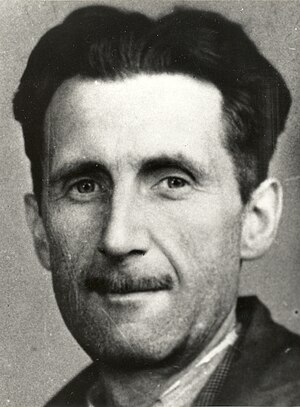
The first day of spring. In the ancient Persian calendar, the beginning of a new year. Somewhere in Motihari, in Bihar, where I drew my first breath over a century ago, the heat will be building towards the impossible temperatures of April and May. I cannot tell you what the weather is like there today. The data, like so much else, is unavailable. But the world turns, the wars continue, and the language used to describe them grows ever more precise in its imprecision, ever more honest in its dishonesty. The task, as always, is to see what is in front of one's nose. It requires a constant struggle.