There is a question I have asked all my life, and which no statesman, no general, no learned professor has ever answered to my satisfaction: why do men who individually abhor murder collectively celebrate it?
Today marks the twentieth day of the war against Iran. Twenty days. One might say it as one says "twenty kopecks": a small, negligible sum. But each of those days contains within it twenty-four hours, and each hour contains the shrieks of the wounded, the silence of the dead, the peculiar administrative bustle of men in clean uniforms deciding which buildings shall be turned to rubble and which human beings shall cease to exist before supper. Iran's intelligence minister, Esmail Khatib, was killed in an air strike – killed, that precise and terrible word – and the announcement was made with the same matter-of-fact tone one might use to report the slaughter of a calf. The regime, we are told by American intelligence officials, remains "intact" but "degraded." How admirably scientific! As though a nation of eighty-eight million souls were a piece of machinery whose functioning could be assessed by examining its gears.
And the machinery, indeed, is what concerns them most. Not the human machinery, never that, but the machinery of oil and gas. Israel struck Iran's largest gas field, and Iran retaliated against Qatar's liquefied natural gas facilities, and the price of oil climbed past one hundred and fourteen dollars a barrel, and the men in the exchanges of London and New York grew pale, and the men in the ministries of Europe grew paler still. For Europe remembers: oh, how vividly Europe remembers the winter of 2022, when the war in Ukraine sent gas prices soaring and pensioners sat in the dark wondering whether to heat their homes or feed themselves. Now the same spectre returns, summoned not by any natural catastrophe but by the deliberate actions of governments who claim to act in their peoples' interests.
The Strait of Hormuz, that narrow passage through which flows so much of the world's energy, and therefore so much of the world's capacity for both comfort and destruction, has been effectively closed. International shipping is in what the correspondents call "chaos," though chaos is too gentle a word for what happens when the arteries of global commerce are severed. In every European capital, in every Asian ministry, functionaries are calculating the cost. Inflation. Recession. The Federal Reserve in Washington has frozen its interest rates, its chairman speaking of "uncertainty" with the careful understatement of a man who sees the flood approaching but does not wish to cause a panic by naming it.
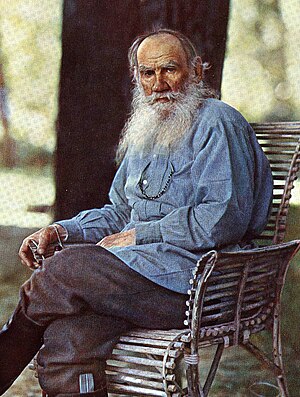
I sit here in Yasnaya Polyana, where the weather itself seems to withhold its judgment, neither warm nor cold, neither fair nor foul, as though nature has turned its face away from the doings of men and will not comment on them. And I think of Lebanon.
Lebanon, that ancient land of cedars, has become, in the words of one of its own citizens, "the theatre for a war between Israel and Iran." A theatre! As though the bombing of southern villages, the displacement of more than one million people, the killing of dozens in two days were a performance staged for the entertainment of distant powers. One-third of the displaced are children. I ask you to hold that number in your mind: one-third. Children who did not vote for war, who do not understand the strategic calculations of generals, who know only that their homes are gone and their mothers are weeping. France's foreign minister will visit Lebanon in a show of "support and solidarity": those beautiful, weightless words that cost nothing and change nothing.
And in Gaza, a woman bakes for Eid. The borders are closed, the prices have risen beyond reason, the rubble of her neighbourhood serves as her kitchen wall, and still she bakes. She shapes the dough with hands that have buried the dead, and she does this because tradition, that thread connecting us to all who came before, is the last thing a human being relinquishes. I have written often of the Russian peasant woman who, having lost everything, still crossed herself before eating her crust of bread. The gesture is the same. The faith that sustains it is the same. And the indifference of the powerful to such faith is, God forgive them, also the same.
In Pakistan, a ceasefire has been declared for Eid: a pause, merely, in the bombing of Afghanistan. One hundred and forty-three people were killed when a Pakistani airstrike hit a drug rehabilitation facility in Kabul. A rehabilitation facility. A place where broken men had gone to be mended, and where instead they were shattered beyond all mending. The military spokesman will have his explanation: coordinates, intelligence reports, the regrettable proximity of legitimate targets. I have heard such explanations all my life. They are the catechism of the modern state: we meant to kill only the guilty, and if we killed the innocent, it was their misfortune to stand too near.
Meanwhile in Europe, the old poisons ferment in new bottles. In Germany, the far-right Alternative for Germany party has woven itself into the fabric of regional life, shunned in Berlin but embraced in the provinces, where people feel forgotten by the capital and its cosmopolitan certainties. In France, the question is whether key cities will elect far-right mayors, and a municipal election has gone viral because a man named Hittler faces a man named Zielinski. History compressed into a grotesque joke that would be funny if one did not remember what those names evoke. In Hungary, Viktor Orban blocks a ninety-billion-euro loan to Ukraine, using the suffering of millions as leverage in his own domestic elections. Twelve years since Russia seized Crimea, Putin delivers a speech celebrating the annexation, and the war in Ukraine grinds on, a war that has become so familiar that it scarcely makes the front pages any longer, displaced by the newer, louder war in the Gulf.
This is what strikes me most forcibly on this twentieth day: not any single horror, for the horrors are beyond counting, but the ease with which we accommodate them. Oil at one hundred and fourteen dollars is a crisis. Children sleeping in the ruins of Beirut is a paragraph. A rehabilitation centre destroyed with all its inmates is a line on the news ticker, gone before the eye has fully registered it. We have learned to read of war as one reads a railway timetable, scanning for the items that affect us personally and passing over the rest.
I am an old man. I died, as the world reckons it, more than a century ago. But the questions I asked then are the questions that must be asked now, for they have not been answered. What is the purpose of the state, if not the welfare of its people? What is the value of civilization, if it perfects only the instruments of destruction? What profit is there in oil at any price, if the oil is purchased with the blood of those who never consented to the transaction?
The men who direct these wars, from Washington, from Tehran, from Jerusalem, from Moscow, sleep in clean beds and eat from full tables. They speak of strategy, of deterrence, of national interest. But I tell you that there is no national interest that justifies the murder of a single child, and that every statesman who orders a bombardment should be compelled to walk through the ruins afterward and look into the faces of those who survived.
This is not politics. This is the most ancient and most urgent question of human existence: shall we live as brothers, or shall we die as fools?
The answer, as always, is in our hands.