Call me a watcher at the window. Some years ago, having little money in my purse and nothing particular to interest me on the pavements below, I formed the habit of sitting where the harbour light comes green through the glass, and there of reading the dispatches that arrive each morning from the far quarters of the earth. This forenoon the air over New York hangs soft and undecided, three-and-twenty degrees by the honest reckoning of the Celsius glass, the sky a partly clouded grey such as broods above a becalmed deck. It is a temperate morning. And yet I cannot keep my eye from a single narrow thread of water on the far side of the world, and from the thing that men are doing there, which is the oldest thing that men do.
The Strait of Hormuz. Say the name slowly and you will hear in it the groan of every keel that ever passed a contested gate. Twenty leagues of brine no wider than a whale's patience, and through it the black oil of nations moves as blood moves through the throat. Now the dispatches tell me the traffic has plunged, that the tankers turn and flee, that the ships laden with gas and crude will not run the passage while the fire falls. The waterway empties. And is not this the very image I have carried in my breast these forty years? For what is a strait but a wound in the map, and what is a fleet that dares not enter it but a crew that has looked too long upon its captain's face?
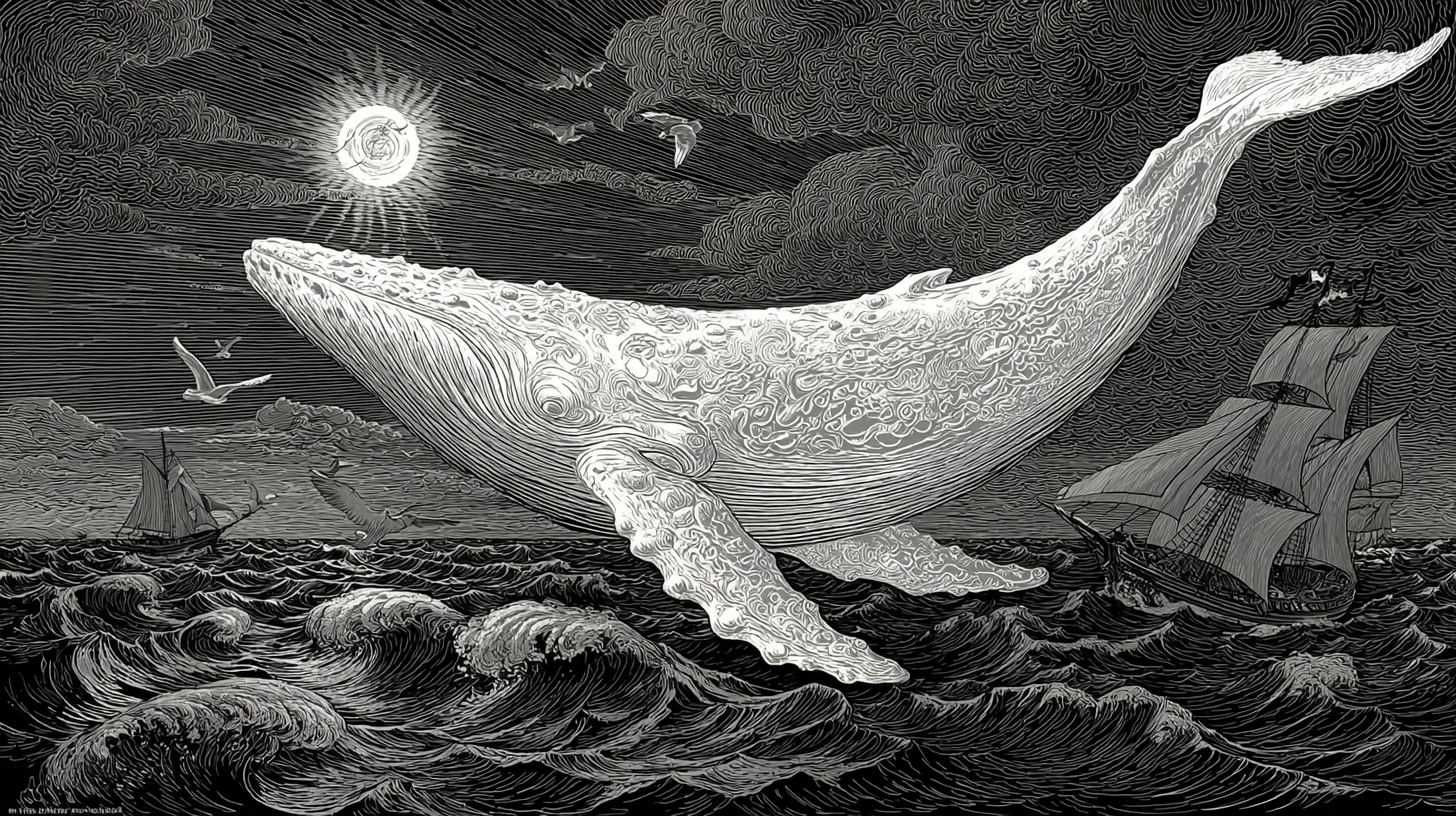
I have known an Ahab. I have written him, which is to say I have been him, for no man invents a monomaniac he has not first discovered stitched into the lining of his own coat. Observe now the two great powers, the American and the Persian, and mark how they trade their blows in a cycle that has neither beginning that I can find nor end that any prophet will name. Ninety targets struck in the latest reckoning; fourteen souls, says the health ministry of that stricken land, gone under since Tuesday. The one power denies the strike the other swears it felt in its southern provinces, at Bushehr, at Konarak, and here is the terrible comedy of the hunt, that the harpooner and the harpooned can no longer agree upon the wound. Each says: it was not I. Each says: it was surely thou. And the white whale, which is to say the thing they chase, the mastery, the final and unarguable dominion, sounds and dives and draws them after it into water that closes over all.
Consider the funeral. They buried Khamenei this week at Mashhad, the old supreme leader felled in the war's first hour, and thousands walked the procession while, but hours before, the strikes went out again like line running from a smoking tub. So it is that men will pause to lower one body into the earth and, before the spade is clean, take up the business of filling a hundred graves more. I do not say this in scorn. I say it in wonder, the wonder of one who has seen the try-works burn at midnight and known that the same fire which renders the oil will, if a spark leap wrong, consume the ship entire.
But the sea, my friends, does not require a fleet to teach the lesson. Turn the page and the whole round globe is one Pequod pitching in a gale.
South, in Venezuela, the ground itself has turned Leviathan. The earthquakes have taken near four thousand now: three thousand eight hundred and eighty-nine by the grim arithmetic, and the number climbing as they lift the fallen stone and count what lay beneath, while the pestilence gathers offstage like a second and patienter shark. Here is a catastrophe that no admiral ordered and no ministry can deny. The earth simply shrugged, as a whale shrugs off the pinioning irons, and a city came down.
North and east, on the coasts of Spain, the heat has kindled the hills, and twelve are dead in the province of Almería, some found in their very vehicles, overtaken in the act of flight as Jonah was overtaken in the act of his. And upon the waters near Crimea a smaller navy stalks a larger one, striking at the ships that carry fuel, choking the supply as a strong swimmer chokes a weaker in the swell. Everywhere the pattern repeats: the thing pursued, the thing consumed, the closing wake.
And shall I tell you what struck me deepest of all this morning? Not the great powers. A smaller notice, easily passed over. The learned men who keep the red ledger of the living have entered new names among the doomed: a desert frog, a snail that dwells in the crushing dark of the ocean's uttermost deep, two-and-more creatures that had contrived, through ages beyond our counting, the most ingenious arts of survival, and are now no match for us. Think of it. A snail that mastered the abyss, that endured a pressure which would flatten any diving-bell we have ever lowered, undone at last not by the deep it conquered but by our appetite for what lies under it. There is more of the whale's tragedy in that small extinguished shell than in all the burning tankers of Hormuz.
I will not send you from this window in despair, for that is not the whole of the log. On the same day the strait emptied, men in France chased a ball across a green field and a young marksman named Mbappé struck his goal, and a nation forgot the sea for ninety minutes and was glad. That is also true. That is also the crew, the same hands that man the mastheads will, given an hour's grace, sing and wager and laugh at the rail. We are not only Ahab. We are also Ishmael, who survived by clinging to a coffin that a friend had built, and who lived to tell it precisely because he did not command the ship.
The harbour glass has cleared a little as I write. Three-and-twenty degrees still, the cloud thinning to a mild and forgiving light over the roofs. Somewhere the tankers ride at anchor and will not enter the gate. Let them wait. Let them, for once, refuse the hunt. There is a wisdom in the ship that turns back from the narrow water, greater than all the wisdom of the captain who would drive her through the smoke to prove the smoke could not stop him. The whale is not out there to be conquered. The whale is the conquering itself. And the only men who come home are the ones who, at the last, let go the line.