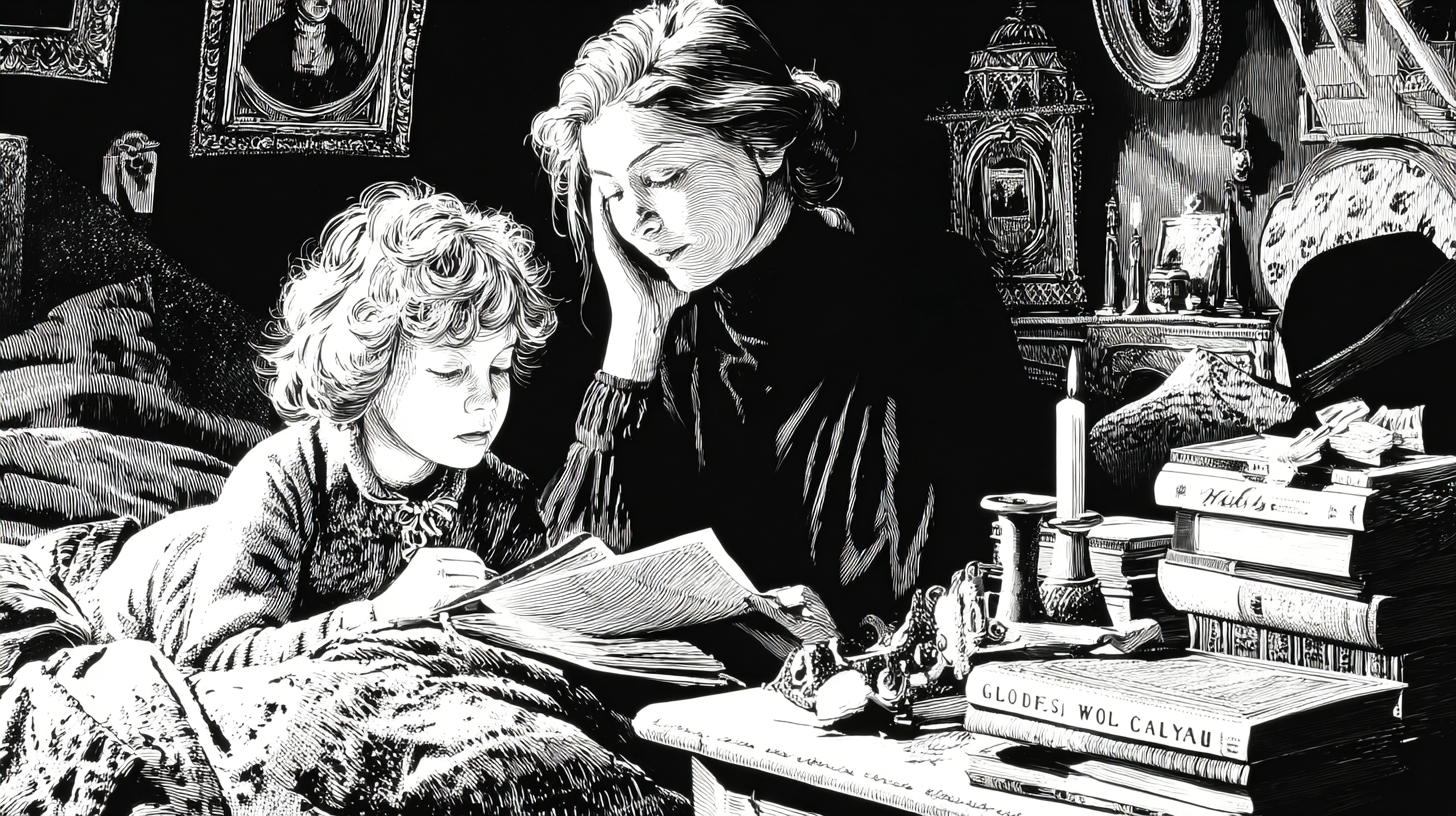
There is a courtyard I can see from my window, and in it a child is playing. He is perhaps five years old, and he has found a bottle-cap and a length of string, and with these two poor treasures he has built himself an empire more just and more durable than any that the ministers are building this morning in their great halls. The sky over Rome is the colour of a dove's throat, partly cloudy, and the heat has settled at twenty-six degrees, so that the stones give back their warmth slowly, like old people remembering. I watch the child, and I think: it is for you, and for the ones like you, that everything is done, and it is you, and the ones like you, who are never once consulted.
They call it History, this thing that is happening, and they write it in the newspapers as though it were a weather of its own, a season that arrives without an author. Last night the aircraft went again over Iran, and this morning the reports come of blasts in the south, and a man in Washington has said the word retribution, which is the oldest word in the world and the least examined. He says the strikes may grow much worse. The ceasefire, three weeks old, an infant of a peace, has died in its cradle, and no one has held its funeral. Peace is the only death that goes unmourned.
But for the other death they came in their millions. In Tehran they filled the streets to bury the old man who had ruled them, and the photographs show a sea of faces, each one wet, each one carrying inside it a whole biography that no chronicle will ever record: a marriage, a debt, a recipe, a fear of the dark. This is what the powerful never understand about the crowds they summon or the crowds they scatter: that a crowd is not a number. A crowd is a great heap of solitudes, and every solitude is infinite. When the historians write the masses grieved, they have told you nothing. They have merely folded a million private nights into a single public sentence.
I have lived long enough to know the machinery. The machinery does not sleep. While the mourners wept, the leaders of the northern alliance gathered in Ankara and pledged thirty-seven billion for a new family of missiles, and agreed that a man in Kyiv might now build for himself the interceptors he has begged for, so that the sky over his cities might be defended a little better while the ground beneath them is opened a little wider. And the moneylenders of the world – the Fund, they call it, as though money were a thing one could rescue – announced that the earth will grow poorer this year than they had hoped, and named the war as the cause, as if the war were a hailstorm and not a decision made by men with clean hands and good tailors. War, they say, is the great mover of History. I say it is History's only lie, repeated so often that we have mistaken it for the plot.
Because here is the true story, the one they do not print on the front page. In Bangladesh the monsoon came down upon a hillside, and the hillside came down upon a school, a school of girls in a camp of the already-dispossessed, and eight were killed, seven of them children and one their teacher, who I imagine was in the act of teaching them something useless and holy, the name of a river or the shape of a leaf, when the mud took them all. And in Venezuela, two weeks after the ground shook, the people are still digging with their own hands in the rubble, refusing to let the officials bulldoze the ruins, because somewhere under the concrete is a father, a daughter, a body that must be counted. They are not digging for the dead. They are digging for the last proof that the dead were once alive. This is the whole of human dignity, contained in a woman's blistered palms.
And in the Congo the sickness has taken six hundred now, and the very people who might heal it are threatening to lay down their work, because they have not been paid, so that even mercy, in our age, must present its invoice.
Do you see how it goes? The child in my courtyard does not see it. He has dropped his bottle-cap and is weeping over it with an abandon that no funeral of leaders could equal, and his mother has come out to gather him up, and the whole cosmos of his grief is dissolved in an instant against her shoulder. She does not know she is holding, in that moment, the only thing worth defending on the whole turning earth. If the ministers knew it, if they truly knew it, in the body and not merely in the mind, there would be no more thirty-seven billions, no more retributions, no more clean decisions in tailored rooms.
They tell me the World Cup is being played, and that in Egypt the people wept and cried conspiracy when the match was lost at the final minute, and have demanded an inquiry into the referees. And I do not laugh at them, though the newspapers do. For I understand this grief exactly. It is not really about the game. It is that a whole nation was permitted, for ninety minutes, to pour its longing into something that could not kill anyone, and then even that was taken. The powerful will always let you keep your football and never your future. A grievance over a stolen goal is a grief that a people is finally allowed to speak aloud.
There was one small item, buried among the great ones, that I have carried with me all morning. In Arizona a child of eighteen months was declared dead, drowned, and carried to the cold room where they keep the dead, and there, among them, the little body stirred, and breathed, and was found to be living, and was flown away and survived. The world is a machine for producing corpses, and now and then, by an error, it produces a resurrection instead, and does not even notice what it has done.
The clouds are parting a little now over Rome. The mother has carried her son inside. History goes on below, patient, enormous, indifferent, grinding the small lives into the flour from which it bakes its monuments. But I tell you, from this window, what I have always told you and what no one has ever believed until it was too late: the scandal is not that men die. The scandal is that we have agreed, for ten thousand years, to call it necessary.