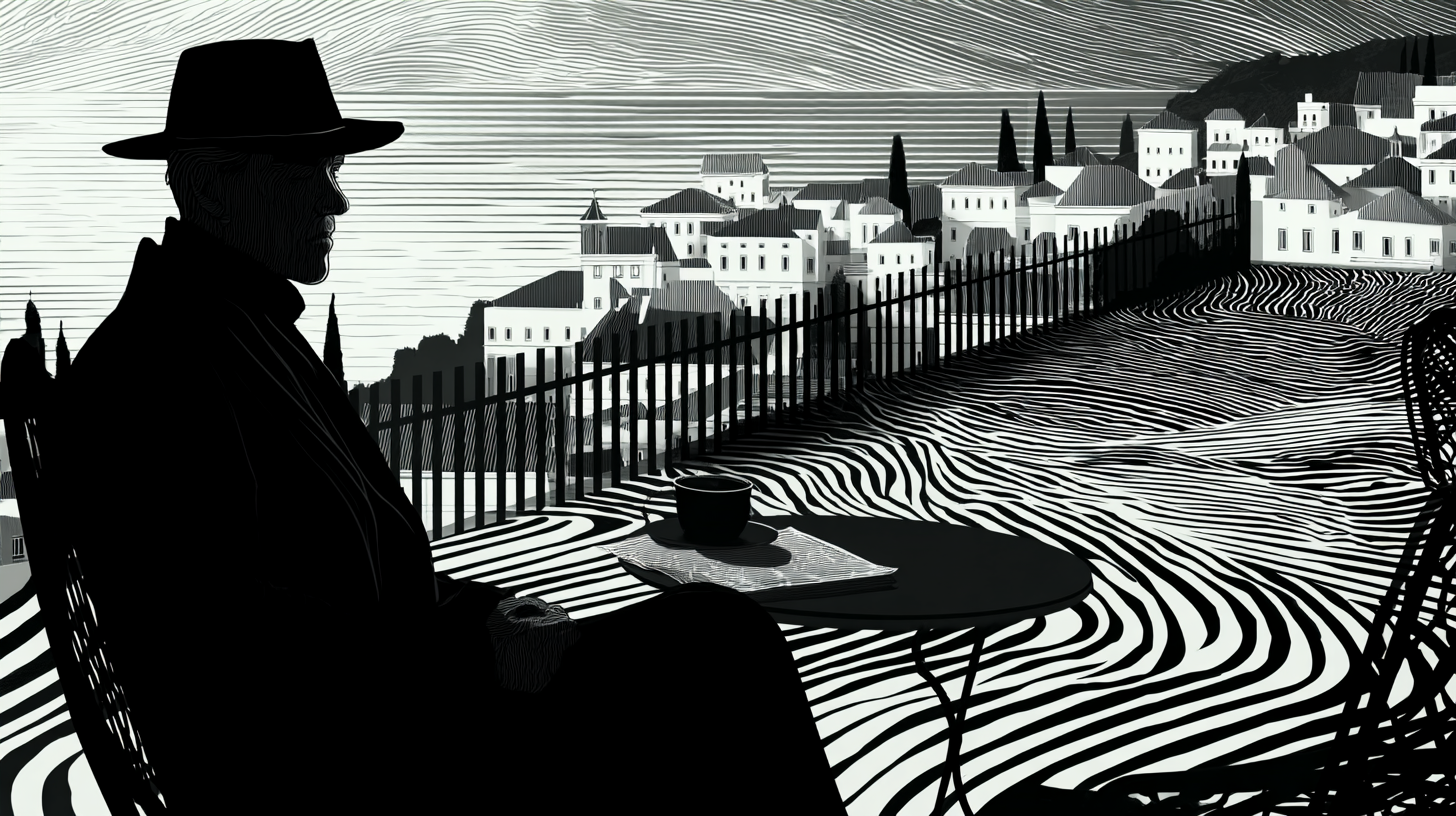
This morning the sky over Algiers is the colour of an unwashed sheet. A severe sandstorm has come down from the south, and the thermometer insists on thirty-three degrees though no one can see the sun that is supposed to be warming us. The Sahara has decided to visit the city, grain by grain, settling on the windowsills, on the rims of coffee cups, on the tongue. One breathes the desert. There is a kind of honesty in it. The weather, at least, does not pretend to be something it is not.
I cannot say the same for the rest of the news, which arrives through the haze like a man shouting good fortune from the deck of a sinking ship.
Last night my country played football against Argentina, and we lost, three goals to nothing, while a small man named Messi scored all three and the commentators wept for joy at his record. I tended goal once, for Racing Universitaire d'Alger, before my lungs decided otherwise, and I have said before that everything I know most surely about morality and the obligations of men I owe to football. So permit me a goalkeeper's authority when I tell you that there is no shame in the three that passed me. The keeper learns earlier than the philosopher that the world is not arranged for his convenience. The ball comes whether he is ready or not. He flings himself at it, knowing he will miss, and flings himself again. This is the whole of it. Algeria lost honestly on the grass, and an honest defeat is worth more than the victory being sold three thousand miles to the east.
For there, in the chancelleries, the great performance continues. Tehran has signed a memorandum with Washington and is announcing it to its people as a triumph, though by every account the war went against them. The mullahs require, after the blockade is lifted, that the Strait of Hormuz reopen within thirty days to the traffic of the world, and they call this magnanimity, as a man being released from prison might thank the warden for the fresh air. In France, where I have eaten and argued and buried friends, the seven richest governments have gathered to bless the arrangement and to declare, with the grave faces of men announcing the obvious, that Iran shall not have the bomb. European leaders who last month would not share a table now smile at the American president as one smiles at a rich uncle whose will is not yet written.
I do not mock the peace. Peace is the only serious thing. If the guns in Lebanon have grown quieter, if the cross-border fire has thinned, then somewhere a mother sleeps tonight who did not sleep before, and that mother is worth every grain of indignity the diplomats swallow. What I distrust is the theatre: the insistence that necessity be dressed as choice, that defeat be paraded as glory. The Iranians in the bazaars understand this better than their rulers. They do not ask whether the deal is a victory. They ask whether bread will cost less and whether their sons will be sent to die. This is the only question, and it is never the one answered from the podium.
The desert has not stopped the other dispatches. A Russian artist was shot dead in Poland, a man who drew caricatures of the powerful under a borrowed name, who made his living turning tyrants into figures one could laugh at. They could not bear the laughter, so they ended the man. And in the English Channel, a warship of the same flag is said to have fired warning shots across the bow of an elderly couple's yacht, two retirees who tried to show they had changed course before the guns spoke. The empire that murders a cartoonist will also frighten pensioners on the water. It is the same gesture, large and small: the state insisting that no man, not even with a pencil or a tiller, shall move except by permission. Against this there is only revolt – the artist's pencil, the keeper's leap, the refusal to grant the lie its dignity.
I think too of the sickness in the Congo, where they say the outbreak may become the worst on record, a year perhaps before it is contained. I wrote once a long book about a plague in this very Algeria, about a town sealed off and the few men who chose to fight the dying simply because it was decent to do so. I invented the rats and the fevers. The Congolese have not invented theirs. There are no heroes in such a thing, only the doctors who go on, and the patients who walk out of the treatment tents on their own legs – seven of them, this week, recovered – while elsewhere fools call the whole catastrophe a hoax. The plague always returns. So does the man who denies it. The only victory available is the small, unglamorous one: to tend, to count, to refuse to lie about the dead.
And then, because the world is never wholly cruel, four hundred cats in Vietnam, stolen to be slaughtered for meat, were taken back by the police and some forty returned to the families who had wept for them. I set this absurd small mercy beside the warships and the sealed cities, and I find I cannot rank them. A man who has saved a cat has saved something. It is not nothing. In a universe that promises us nothing, it is, in fact, very nearly everything.
The sand goes on falling. By evening it will have buried the football, the memorandum, the murdered artist, the cats, under the same indifferent grey. We will sweep the windowsills and begin again tomorrow, which is the only thing the keeper, the doctor, and the man with the pencil have ever truly known how to do.