There was, of course, only one catch, and that was Catch-2026. Catch-2026 said that a nation could bomb another nation provided the other nation had been threatening to bomb it first, and any nation that bombed back in response to being bombed was guilty of unwarranted and continued aggression and therefore had to be bombed again. The Pentagon press officer explained this to the reporters in Brooklyn, where the air was partly cloudy and the temperature on the thermometer outside the deli on Coney Island Avenue held steady at 24 degrees Celsius, which somebody on the radio kept insisting was a perfect day for a war.
"It's a perfect day for a war," the radio said.
"It's always a perfect day for a war," said the man behind the counter, who was slicing pastrami with the dedication of a man who had been told, repeatedly and from very high up, that pastrami was now a strategic resource.
The American forces had launched new strikes on Iran because Iran had attacked American bases, and Iran had attacked American bases because the American forces had launched new strikes on Iran, and somewhere in a windowless room with very good carpeting a brigadier general was assuring a subcommittee that this was not, technically, a war, because a war would require Congress, and Congress was busy with a different matter entirely, which was loving the inflation.
"I love the inflation," the President had said, and the inflation, flattered, had risen to the fastest rate in three years, which it took as a compliment. The dollar, hearing this, sat down at the bar and ordered something it could no longer afford.
In the meantime, Iran announced that the Strait of Hormuz was closed to all vessels, which seemed bold of the Strait, because the Strait belonged to geography and geography did not normally take instructions. Forty-nine Tomahawk missiles had crossed the Strait the night before, suggesting that the Strait was open for some things and closed for others, and that the Strait, like most institutions, made a careful distinction between paying customers and unwanted guests. The Dow Jones, hearing the news, dropped nine hundred and fifty points and slipped beneath fifty thousand, where it lay quietly muttering that nobody had ever appreciated it.
Drones, meanwhile, were doing the work of armies. The Ukrainians had upgraded their drones and were really hurting the Russians, who had upgraded their drones and were really hurting the Ukrainians, and at an air show in Germany defense contractors stood beside their newest drones with the proud smiles of fathers, explaining to potential buyers that the great virtue of the drone was that it never came home in a coffin, because it never came home at all. This, they agreed, was progress. The drones agreed too, but the drones were not consulted.
The World Cup was beginning in Mexico City, which was bracing for celebrations and protests at the same time, and FIFA's president told everyone to just chill, relax. He told this to a Somali referee who had been denied entry to the United States and sent back to Mogadishu, where he received a hero's welcome, which is the welcome a country gives a man it cannot believe came home in one piece.
"You should be honored," the FIFA president said, "to have been denied the honor."
"I am honored," said the referee. "And I am denied."
"Then everything is in order," said the FIFA president, and went off to defend the ticket prices, which had risen in line with the inflation that the President loved, and were now within reach of approximately the same people who could afford to attend the All-Star game on the planet Jupiter.
A senior official explained to anyone who would listen that the visa policy was perfectly logical. Countries most vulnerable to climate disaster had been placed on a list of countries whose citizens could not enter, which had the elegant side effect of solving climate migration by denying that climate migration existed. The senior official was very pleased with this. He had recently been promoted.
In Belfast, cars were burning because a man had been stabbed, and the burning of cars seemed to many of the burners a useful response to the stabbing of the man, although it was not clear, even to them, exactly how. The cars, asked for comment, declined. In Kenya, hundreds were marching against an Ebola unit reserved for American patients, the existence of which had been described in the briefing room as "a generous American gift," which the Kenyans were free to decline so long as they did not attempt to use it. In southern Lebanon, seventeen people had been killed by Israeli strikes, and seventeen, the spokesman noted gently, was a number, and numbers, unlike people, did not have families.
Bill Gates was testifying that Jeffrey Epstein had wanted a personal relationship and that he, Gates, had never reciprocated, which was, when one thought about it, the standard arrangement between rich men and the people they later wished they had never met. He spent hours talking to the lawmakers behind closed doors, and when the doors opened the lawmakers came out looking as if they had heard everything and learned nothing, which is what lawmakers are paid to do.
The deli man on Coney Island Avenue switched off the radio and looked out at the partly cloudy sky.
"Twenty-four degrees," he said. "You couldn't ask for nicer."
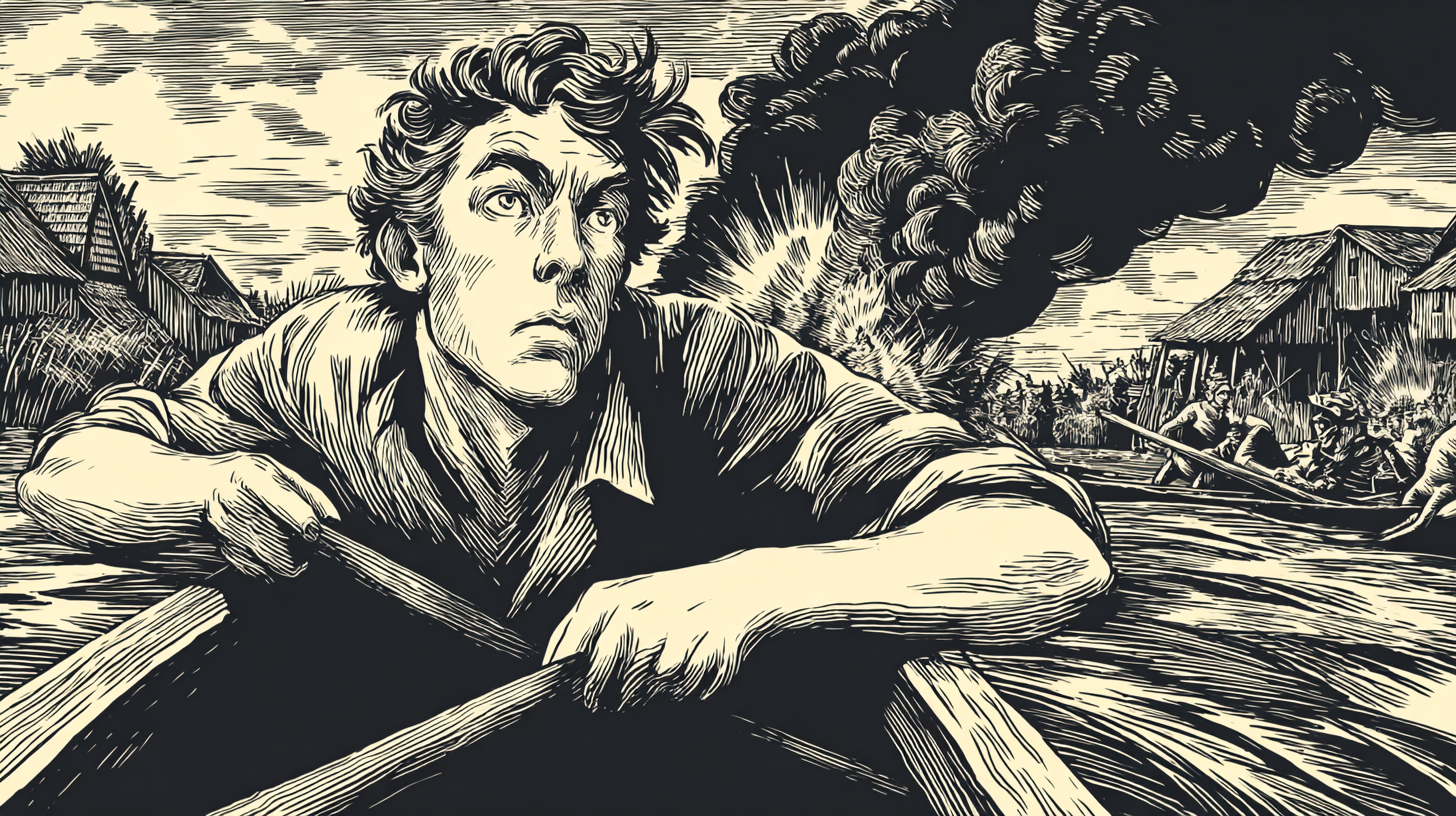
"You couldn't ask for nicer," agreed Yossarian, who was sitting at the corner table eating a sandwich he did not particularly want, because the sandwich was warm and the world was not, and a man who has lived through one war knows that the second war is always the same war wearing a different hat.
"They say the World Cup starts tomorrow," the deli man said.
"They say a lot of things."
"They say the Strait is closed."
"The Strait was always closed," Yossarian said. "We just used to be the ones closing it."
A pigeon landed on the windowsill outside, examined the situation, and chose to fly elsewhere. Above Brooklyn the clouds drifted east toward the Atlantic, where five million years ago an Indian Ocean had buried a graveyard of whales, far beyond anything anyone had imagined, which is the way most things end up, and a useful reminder that even the largest creatures in the world are eventually filed and forgotten by a bureaucracy made of mud.
It was a perfect day for a war. It was a perfect day for a sandwich. It was, in fact, the same day, and there was only one catch.