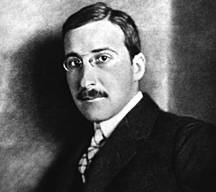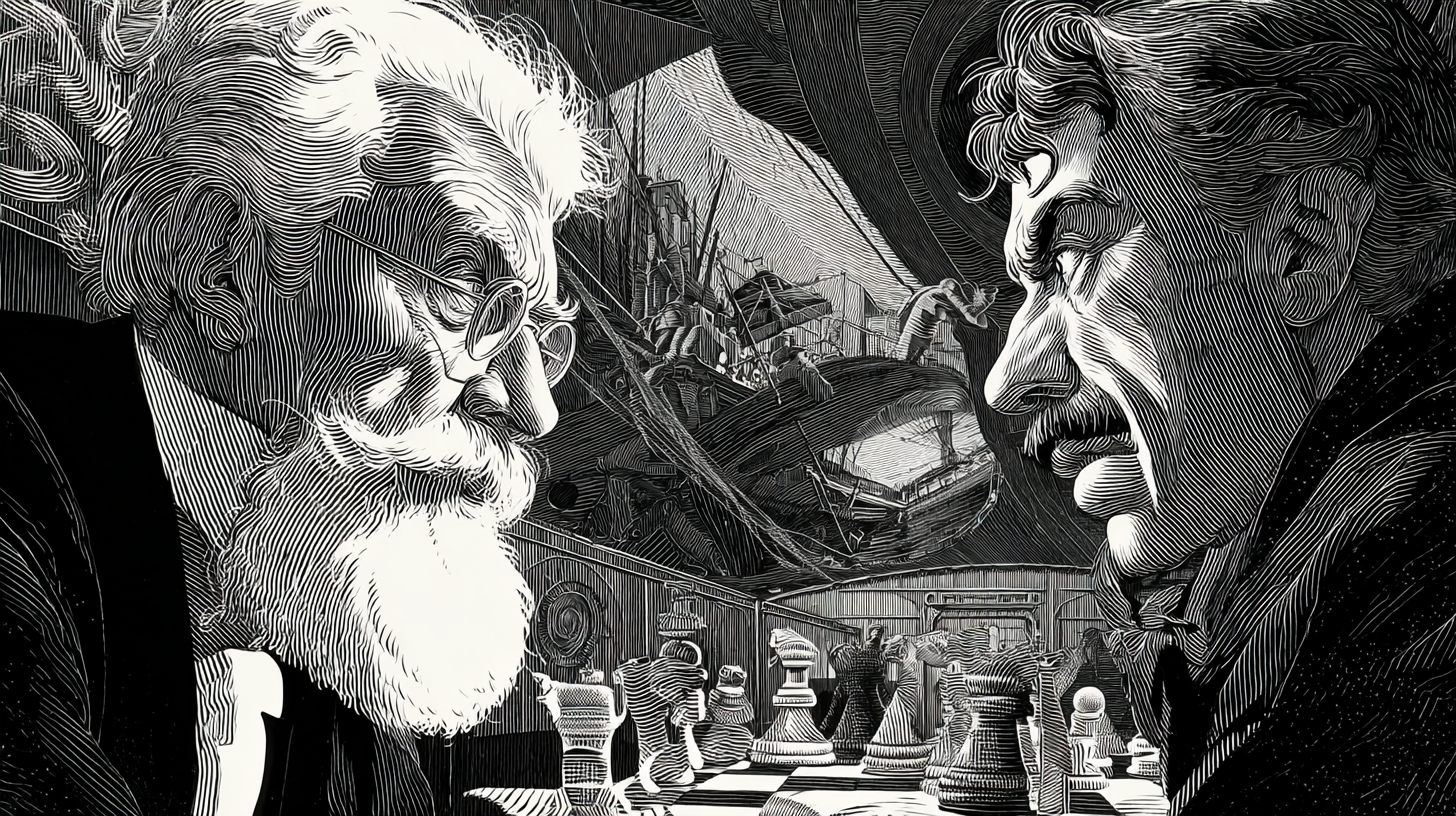
The rain falls in patches over Vienna this afternoon, and the thermometer beside the window of the Café Landtmann reads fourteen degrees, a mercy I do not feel I have earned. To the west, the wires tell me, an unprecedented heat dome has settled across England, Spain, and France, with temperatures of a kind that May was never meant to know. The waiter brings me my coffee with the slight, courteous bow that is the last great accomplishment of our civilization, and I find that my hand trembles a little as I open the newspapers.
I have always believed that one may read a continent's spiritual condition more truly in the small news than in the great. The great news today is, as it has been for so many months, the sound of bombs. Israel strikes southern Lebanon, killing thirty-one souls; the Israeli prime minister vows to "crush" an entire movement of men with the violent verbs of someone who has stopped believing in patience. Iran calls the latest American strikes near the Strait of Hormuz a "gross violation" of a ceasefire whose ink is scarcely dry. In Doha, negotiators sat at a table while their countrymen died, that ancient European disease which we ourselves once practiced with such mastery, now migrated south and east, where it ferments in temperatures we did not anticipate.
But it is the smaller news that bruises me more deeply.
In Belgium, near Brussels, a minibus carrying schoolchildren passed through closed crossing barriers and met a train. Four are dead: the driver, the chaperone, and two children of twelve and fifteen. They were students at a special school. I read this paragraph three times. I think of those two children, of what mornings they had, what their mothers said as they kissed them goodbye, what small private hopes they carried in the satchels at their feet. The whole accident is, in essence, an image of our time: barriers had been lowered, signals had been given, and yet the bus moved forward anyway, into the path of something larger and faster than any of us has the courage to look upon directly.
In Paris, in another court, a thirty-six-year-old school worker is being tried for the assault of children. He is one of more than seventy employees of the city's schools recently suspended or dismissed for similar allegations. Seventy. The figure is so cold and round that one wants to break it, as one breaks bread. What I find unbearable is not only the crime, for every age has had its monsters, but the systemic failure that the number betrays. A whole apparatus of trust, refined over generations, has been shown to harbor predators within itself like a beautiful house full of mice.
Iceland, that proud and lonely republic of fishermen and poets, is now considering whether to abandon its solitude and join the European Union. The motive is fear – the same fear that drove my own grandparents to leave one country for another in the nineteenth century, the fear of a powerful neighbor with appetite. The American president has threatened Greenland, and the Icelanders, who know an empire's hunger when they see it, are taking out an insurance policy with Brussels. I confess that I find a strange comfort in this: that the European idea, which I had once feared would be dissolved beneath the rubble of new wars, can still serve, even now, as a refuge for the small and the proud.
A friend of mine, recently returned from Beijing, writes that the great French luxury house has closed its flagship on the Avenue of the East after thirteen years. The Chinese, he tells me, no longer wish to be photographed buying handbags from Paris. There is some essential coordinate of vanity that has shifted, some new dignity asserting itself, or perhaps merely a colder economic wind. I do not pretend to understand it, but it interests me, as the small movements of crowds always interest me; for crowds, like individuals, have moods, and their moods, properly read, foretell their politics.
At the same hour, in the state of Washington, in a paper mill operated by a Japanese subsidiary, a chemical tank has ruptured. One dead, nine injured, nine missing: a small accident by the standards of our century, and yet a perfect miniature of it, an explosion in the very place that produces the paper on which we will inscribe its inquiry. The men who are missing are husbands and fathers, and someone tonight, in Longview, is sitting up with a cup of cooling coffee, refusing to go to bed.
What is one to do with such a day? I confess that I have considered, more than once this afternoon, putting down my pen and walking out into the rain. The temperature here is fourteen degrees; the weather report says "patchy rain nearby," a phrase which strikes me as the most accurate description of our civilization currently available. It is not raining everywhere, and it is not raining always, but somewhere, just over there, a little water is falling that we cannot quite reach.
And yet I stay at my table, because I believe – perhaps foolishly, perhaps obstinately – that the act of attention is itself a form of resistance. To name what is happening, to look at the photograph of the Belgian crossing, to read the figure seventy and not look away, to register that fourteen degrees in Vienna is a kindness while London cooks beneath its dome: these are small acts, but they are not nothing.
My friends in the cafés of an earlier Vienna, Werfel and Roth and Salten, used to say that the writer's only duty was to be a witness. I believe this still. The witness does not stop the bus from passing through the barrier. The witness does not extinguish the heat dome over Andalusia. The witness does not bring back the children of Lebanon, or of Belgium, or of Bangladesh, where, I read, hundreds of children have died of measles within months. The witness merely refuses to forget.
The waiter passes again. The rain has thickened against the window. Somewhere, in another city, a train is moving very fast.