It is ten degrees in London this afternoon, a pale and partly clouded Sunday, the sort of half-warmth that the calendar insists is spring while the wind from the Embankment quietly disputes the claim. I have walked as far as Whitehall and back, past the cordons of policemen drawn up in their thousands to keep one half of the country from striking the other, and I find that I cannot get a single phrase out of my head. The phrase is bargaining chip. The President of the United States has used it, in connection with the lives of the people of Taiwan, and the wireless has been repeating it all morning as though it were a kind of weather.
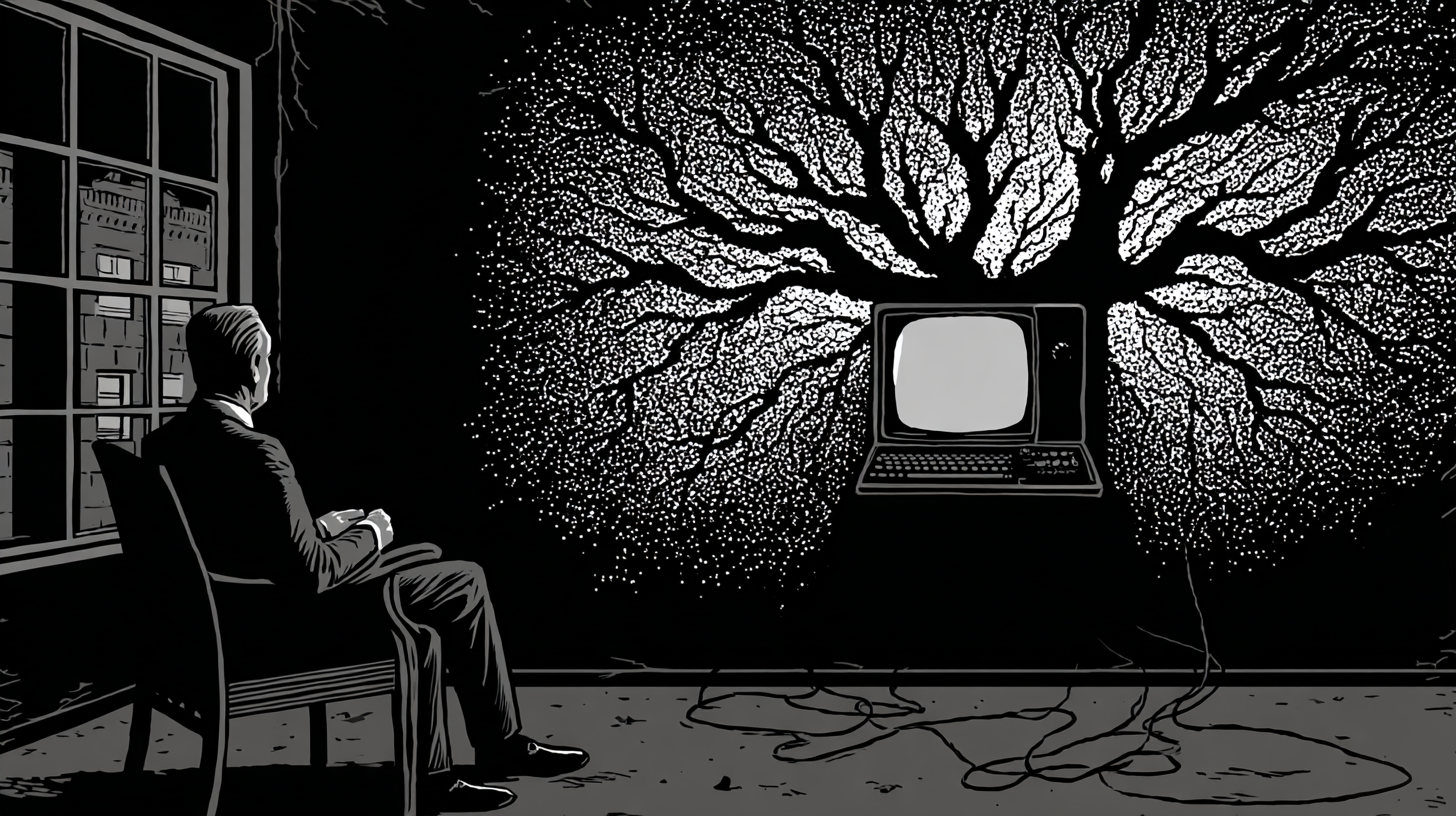
A bargaining chip is a small flat object made of plastic or bone. It exists to be pushed across a green table. It has no preferences and no relations. It does not have a mother. When a politician calls twenty-three million people a bargaining chip, he is not lying exactly – he is performing a small, almost invisible operation on the English language, by which a population is converted into a counter and a counter is converted into nothing in particular. Once the operation is complete, the population can be slid in any direction the player chooses, and no one at the table is obliged to feel anything about it.
I mention this because I think it is the characteristic act of our moment, and because the front pages today are full of such operations, performed with varying degrees of skill. The Americans, fresh from their summit in Peking, have warned Taipei not to declare itself independent; Taipei, with the weary courage of the cornered, has replied that it already is. Meanwhile in the Persian Gulf the Iranians are said to be preparing a system of tolls in the Strait of Hormuz, and the President has warned them of a "very bad time", a phrase whose vagueness is its whole point. Very bad might mean anything from a tariff to a city in ashes. The ambiguity is not a failure of language. It is the work the language is being paid to do.
I went down to Trafalgar Square in the morning to see the rival demonstrations, because one ought, occasionally, to look at one's countrymen. The far-right rally was very large and very loud and full of flags, and on the other side of the police line the pro-Palestinian march was very large and very loud and full of flags also, and between them stood the constabulary in their fluorescent jackets, looking tired. There was the usual quantity of shouted nonsense, the usual quantity of decent feeling, and a perfectly ordinary number of men whose chief pleasure in life is the chance to push a stranger.
What was new, and what I shall remember, was a great screen that had been smuggled into the right-wing crowd by a group calling itself Led By Donkeys, and on which was displayed, in letters six feet high, a pro-immigration message addressed directly to the people standing in front of it. The crowd, deprived for several seconds of the certainty that it controlled its own theatre, did not quite know what to do. Some booed. Some laughed. A few, I think, read. It was the most cheering thing I saw all day, not because the message was unanswerable – nothing political ever is – but because it broke, for a moment, the airtight quality that political rallies acquire when no one is permitted to disagree without being beaten for it.
The far-right organisers had imagined a closed system: their slogans, their flags, their cameras, their applause. Into this closed system a window had been cut. Through the window came an argument. Whether the argument was right or wrong was, in a sense, secondary. What mattered was that it was an argument, in a place where only assertion had been planned.
The other news of the day is a list of killings, and it is worth noticing the verbs we use.
In Gaza, an Israeli airstrike has killed the head of Hamas's military wing. In northern Nigeria, the Americans and the Nigerian army announce that they have eliminated a man whom the President describes as "the most active terrorist in the world". In Modena, a man drove a car into eight pedestrians and was stopped by passers-by. In Bolivia the army has been clearing roadblocks with tear gas; in Colombia two campaign workers have been shot a fortnight before the vote; in Bangkok a freight train has crushed eight people because a barrier did not come down. From Berlin one reads that the police struck protesters at a Nakba memorial; from the Democratic Republic of Congo, that an Ebola outbreak has killed eighty and that no vaccine is yet available.
All of this is reported in the indifferent prose of the international wire services, in which murders, accidents, and air raids appear in identical paragraphs, each rounded off with the same brisk past participle. One must respect the difficulty of the work. But the cumulative effect on the reader is what I have always feared most: not that he should be horrified, but that he should not be. Horror is hard. Drift is easy.
I am persuaded that the central political act of our time is no longer the bayonet but the bored shrug, and that the bored shrug is produced, very deliberately, by the careful softening of every word that might otherwise oblige a citizen to take notice. Bargaining chip. Very bad time. Eliminated. Each of these phrases is a small anaesthetic, administered to the public conscience before the operation begins.
It would be dishonest of me to pretend I have a programme. I have not. The most a writer can do, in a week like this one, is to refuse to repeat the official adjectives. If a man is killed, write killed. If a city is bombed, write bombed. If a population is being treated as a counter on a table, say so, and say also the name of the player who has placed it there. This is not eloquence; it is hygiene.
The cloud is beginning to break up over the river. A pale sun is laid across the wet stones of the Embankment. In an hour the policemen will fold up their cordons and go home to their tea, and the demonstrators of both sides will compose accounts of their own bravery, and the wireless will resume its calm enumeration of distant deaths. Somewhere a man in a good suit is preparing to call another twenty million people a chip.
It remains the small private duty of the rest of us to say: they are not a chip. They are not eliminated. They are not, regrettably, a very bad time. They are people. And the words by which they are made into something else are, in the end, the first weapon used against them.