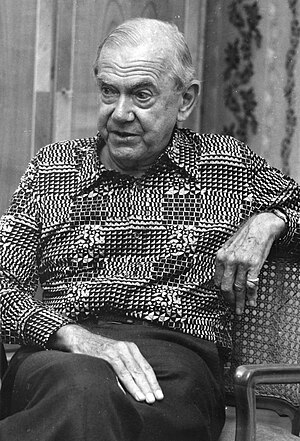
The cloud cover above Berkhamsted this morning was neither one thing nor the other – partly cloudy, ten degrees, the kind of English weather that refuses to declare itself. It reminded me of a diplomat I once knew in Saigon who claimed he represented no particular interest. He was, of course, the most dangerous man in the room.
Today all the mediators are in motion. Pakistani envoys have arrived in Tehran, carrying with them the enormous, unspoken weight of a "major breakthrough": that phrase beloved of foreign ministries, which so often precedes the most spectacular failures. The Americans dismiss reports that their President wishes to extend the ceasefire, while simultaneously expressing optimism that talks will yield an agreement. One has learned, in a long life of observing the powerful, that optimism expressed through official channels is merely anxiety wearing a borrowed suit.
The war with Iran has entered that peculiar phase which I have seen repeated in so many conflicts – the phase in which everyone speaks of peace while carefully maintaining the machinery of destruction. The ceasefire is described as "fragile," that diplomatic adjective which means it exists only so long as nobody examines it too closely. In the streets of Iranian cities, ordinary people wonder whether a deal can be done, and one imagines them going about their daily errands with that particular alertness that comes from living in a country where the sky itself has become untrustworthy.
Meanwhile, China's role in the affair unfolds with the patience of a Shanghai banker counting his investments. The Americans claim Beijing has been shipping dual-use parts to Iran for years: those wonderfully ambiguous components that might build a hospital generator or might build something else entirely. President Trump now claims that China's leader has agreed, by letter, to stop sending weapons. A letter. One thinks of all the letters that have been written between heads of state, so beautifully composed, so carefully filed, so thoroughly ignored.
In Rome (or rather, in the space between Rome and Washington) another kind of rupture has occurred, quieter but no less significant. The American President has broken with Giorgia Meloni, once considered his closest European ally, over the tangled question of the Pope and Iran. It is a very Greene-ish situation, if you will forgive the indulgence: a friendship between two leaders of the political right, destroyed not by ideology but by the intervention of a man in white vestments who believes in something larger than either of them.
Pope Leo XIV is in Cameroon this week, greeted by enormous crowds, returning to a country he visited twenty years ago when he was simply "Father Bob." There is something both touching and faintly troubling about that detail – the American priest who walked among Africans as a humble servant of God, now returned as the most powerful Catholic on earth. The Church grows fastest in Africa, yet Africans play a comparatively small role in its leadership. It is a familiar colonial arithmetic, merely dressed in different robes.
The Pope's quarrel with Trump has become public, which is to say it has become a performance. Leading conservative Catholics have taken sides – most of them, it seems, with the pontiff. One wonders what the President makes of this. He is accustomed to loyalty purchased and loyalty demanded, but the loyalty of faith operates by different rules, rules that no executive order can amend.
In South Africa, a man named Roelf Meyer has been appointed ambassador to the United States. Meyer was a chief negotiator during the talks that ended apartheid – an architect of compromise in a country where compromise once seemed impossible. That Pretoria should now send an architect of racial reconciliation to a Washington consumed by its own divisions has a symmetry that a novelist would hesitate to invent, for fear of being accused of heavy-handedness.
And yet the families of apartheid's victims are still searching for answers, thirty years after the Truth and Reconciliation Commission began its hearings. The commission promised truth in exchange for justice: a transaction that satisfied neither fully. One thinks of the four men who set off on that June evening in 1985, driving home from a meeting, and never arrived. The truth of what happened to them is known. The justice remains outstanding. It is the oldest story in the world: we are willing to confess everything except the obligation to make amends.
In Kharkiv, a postman named Oleksiy Klochkovsky continues to deliver mail through the war zone, four years into the Russian invasion. He drives his route with one ear tuned for drones. Europeans have promised more aid to Ukraine – they "cannot lose sight" of it, they say, even as the conflict in Iran dominates every front page. But it is not governments that hold a country together when the bombs are falling. It is postmen, and nurses, and the woman who still opens her shop each morning because someone must sell bread. The heroism of the ordinary is the only kind that endures.
In El Salvador, a woman named Sugey Amaya waits outside the prison gates. Her brother was swept up in the mass arrests four years ago, and she has devoted her life to helping prisoners like him. The state has now published a law allowing life sentences for children as young as twelve. One writes that sentence and pauses, because there is nothing to add to it that would make it more terrible than it already is.
In a Nairobi courtroom, a man has been sentenced to a year in prison for attempting to smuggle 2,200 ants out of Kenya, bound for China. There is something almost comic about it, the image of a man at the airport, his luggage crawling with contraband insects, until one considers what it represents: the quiet, relentless extraction of the natural world by those who can afford to buy it from those who cannot afford to protect it.
And in Washington, the President threatens to fire the chairman of the Federal Reserve if he does not leave by May. It is the kind of threat that would once have been unthinkable – the executive reaching into the supposedly independent machinery of monetary policy and simply removing the inconvenient part. But we have learned, in these years, that the unthinkable is merely the not-yet-attempted.
The cloud cover has not shifted over Berkhamsted. Ten degrees. The garden is still. In a world where mediators shuttle between capitals and letters are exchanged between leaders who do not trust each other, where postmen deliver mail through artillery fire and women wait at prison gates, there is a strange comfort in weather that refuses to commit. It is honest, at least, about its own uncertainty.