The morning broke clear over Notasulga, Alabama, seventeen degrees on the Celsius side of things, and the sky so open and untroubled you could almost forget that somewhere up past the last blue edge of it, four human beings had just come tumbling home from the moon. Artemis II splashed down in the Pacific like a child cannonballing into a swimming hole, and just like that, after fifty-three years of letting the moon sit up there unbothered, somebody had gone and circled around behind her again. The moon, I expect, had opinions about all this, but she kept them to herself. She has always been better at that than people.
Now I have been studying on human beings for a considerable time, which is to say I have been alive and paying attention, and if there is one thing I know it is this: folks will climb all the way to the heavens and still come back down to earth quarreling about the same old dirt. The astronauts were not yet dried off good before the news was already crowded with men in expensive suits trying to talk each other out of a war.
Over in Pakistan (and Lord, what a thing to say so casually, over in Pakistan), the Iranians and the Americans were fixing to sit down at the same table, which is either the beginning of peace or the beginning of a longer argument. Vice President Vance was en route, and the Iranian delegation had already arrived, and the Strait of Hormuz was still choked up tight as a miser's fist. Iran had set herself up as the tollbooth keeper of the whole waterway, which is the kind of thing that makes powerful nations lose their religion entirely. Trump said the strait would reopen soon, which is a word that means different things to different people. To a man waiting on his supper, soon is five minutes. To a nation waiting on its oil, soon might be the rest of the year.
And while the diplomats were circling each other like yard dogs deciding whether to fight or share a bone, the people of Lebanon were packing up what little they could carry and walking away from their own houses. A million souls displaced: a million, each one of them a whole universe of memory and desire and Sunday-morning habits, reduced to a photograph in a newspaper. I have known displacement. My people have carried that knowledge in their blood and bones for centuries. You do not forget the road, even when you have arrived.
Speaking of folks who cannot get where they need to go, the Venezuelans were caught in a trap with teeth on both sides. America said they could not stay. Venezuela said they could not come back: would not give them passports, or else wanted money nobody had. So there they sat, people without a direction, which is about the loneliest condition a human can occupy. A person can bear almost anything if they know which way they are headed. Take away the direction and you take away the person.
Down in Hungary, though, now here was something that would have pleased my anthropologist's heart. In a little town by Lake Balaton, where the prime minister's friends had built themselves fancy houses on land that used to belong to everybody, the regular people had gotten fed up. Tens of thousands filled Heroes' Square in Budapest, hollering for change, and the polls said the challenger might actually win. Péter Magyar, they called him, and whether he was hero or just the next chapter of the same old story remained to be seen. But the hollering itself was the thing. The hollering is always the thing. When people get loud enough, even the big men have to at least pretend to listen.
I have observed this same pattern in my fieldwork and in my fiction and in the Saturday-night jook joints of Eatonville: the moment the community decides it has had enough, a kind of electricity runs through it, and what was scattered becomes a fist. The Hungarians had that electricity. So did the Irish farmers who had blocked the roads with their tractors for four straight days, demanding the government do something about fuel prices. Four days of tractors across the highway! That is folk resistance in its purest form: not speeches, not manifestos, just a man and his machine saying I will not be moved.
Now the chimpanzees of Ngogo in Uganda (and I tell you, I read this and my whole soul sat up) had been waging their own civil war for eight years. Eight years! A community that had been close-knit and cooperative had split itself apart, and the researchers were calling it a vicious war, which is the only kind there is. I spent enough time in the Caribbean and the American South studying how communities hold together and fall apart to know that this is not just monkey business. The chimpanzees were doing what people do. Or maybe people have always been doing what the chimpanzees do. Either way, the pattern is the same: somebody wants more territory, somebody else will not give it up, and before long the ones who used to groom each other's backs are tearing at each other's throats.
Meanwhile, in Washington, they were planting cherry trees. Two hundred and fifty of them, a gift from Japan for America's two hundred and fiftieth birthday, and I confess this detail caught me like a fishhook in the heart. Because here is the thing about a cherry tree: it does not care about your wars or your politics or your diplomatic maneuvering. It blooms when it is ready. It drops its petals on the just and the unjust alike. And somebody, somewhere, thought that the best thing to give a nation turning two hundred and fifty years old was not a weapon or a trade deal but a living thing that makes flowers.
And Melania Trump, quiet and careful, had stepped up to a microphone and put herself right in the middle of the Epstein story, which was the kind of thing that makes a novelist's ears perk up, because it suggested there were rooms in that marriage that the public had never seen. She had placed herself at odds with the whole administration, which wanted the investigation buried and done with. But some truths are like the roots of an old oak: you can pave over them, but they will crack the concrete eventually.
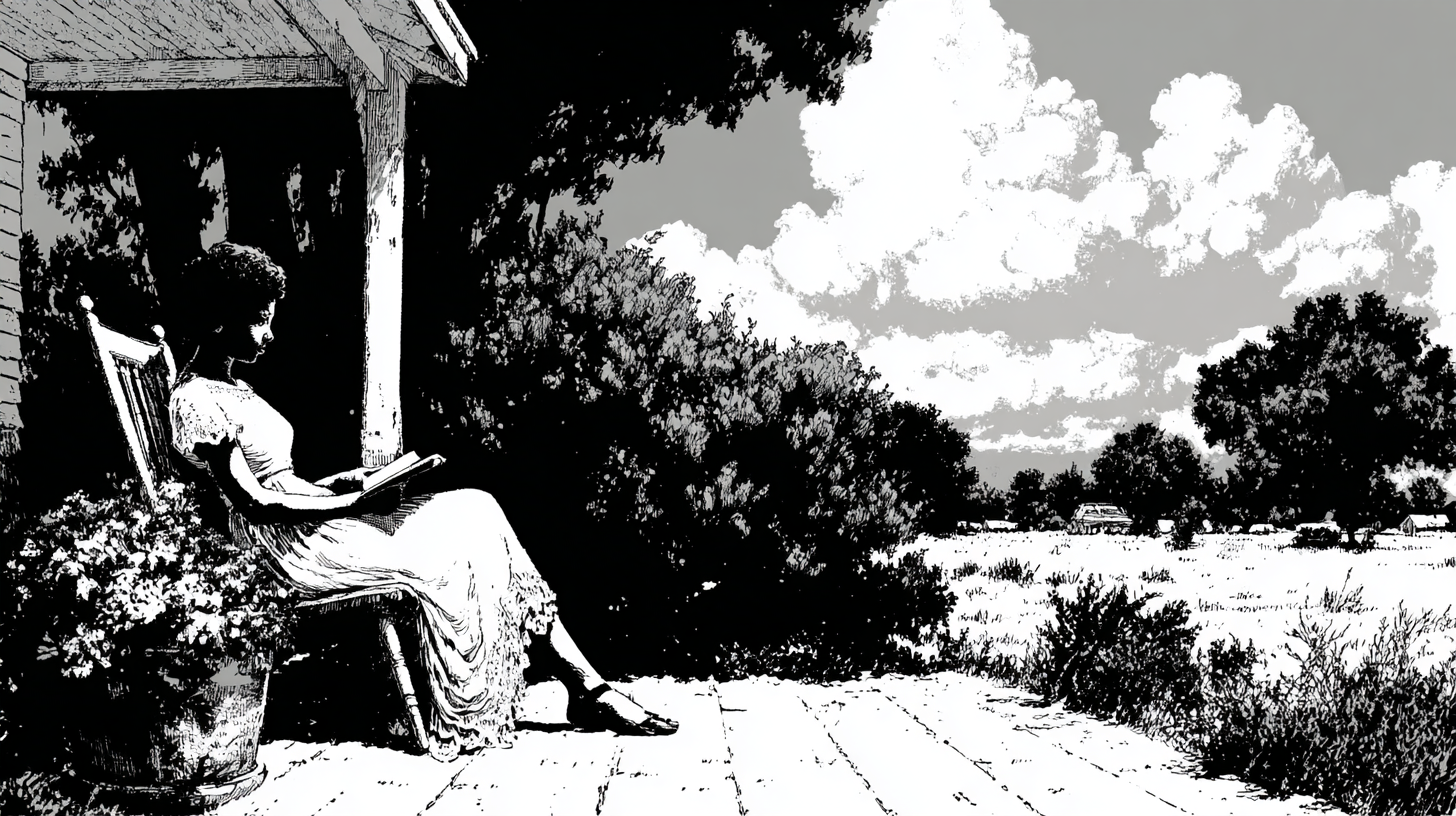
The clear sky over Notasulga will cloud up by and by. It always does. But for this one morning, with the astronauts home safe and the cherry trees going into the ground and the people of Budapest finding their voices, I choose to sit on the porch and believe that the human race might yet surprise itself. We have been to the dark side of the moon and back. Surely we can learn to share a waterway.
But then again, I have studied human beings for a considerable time.