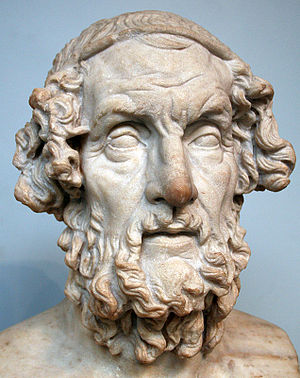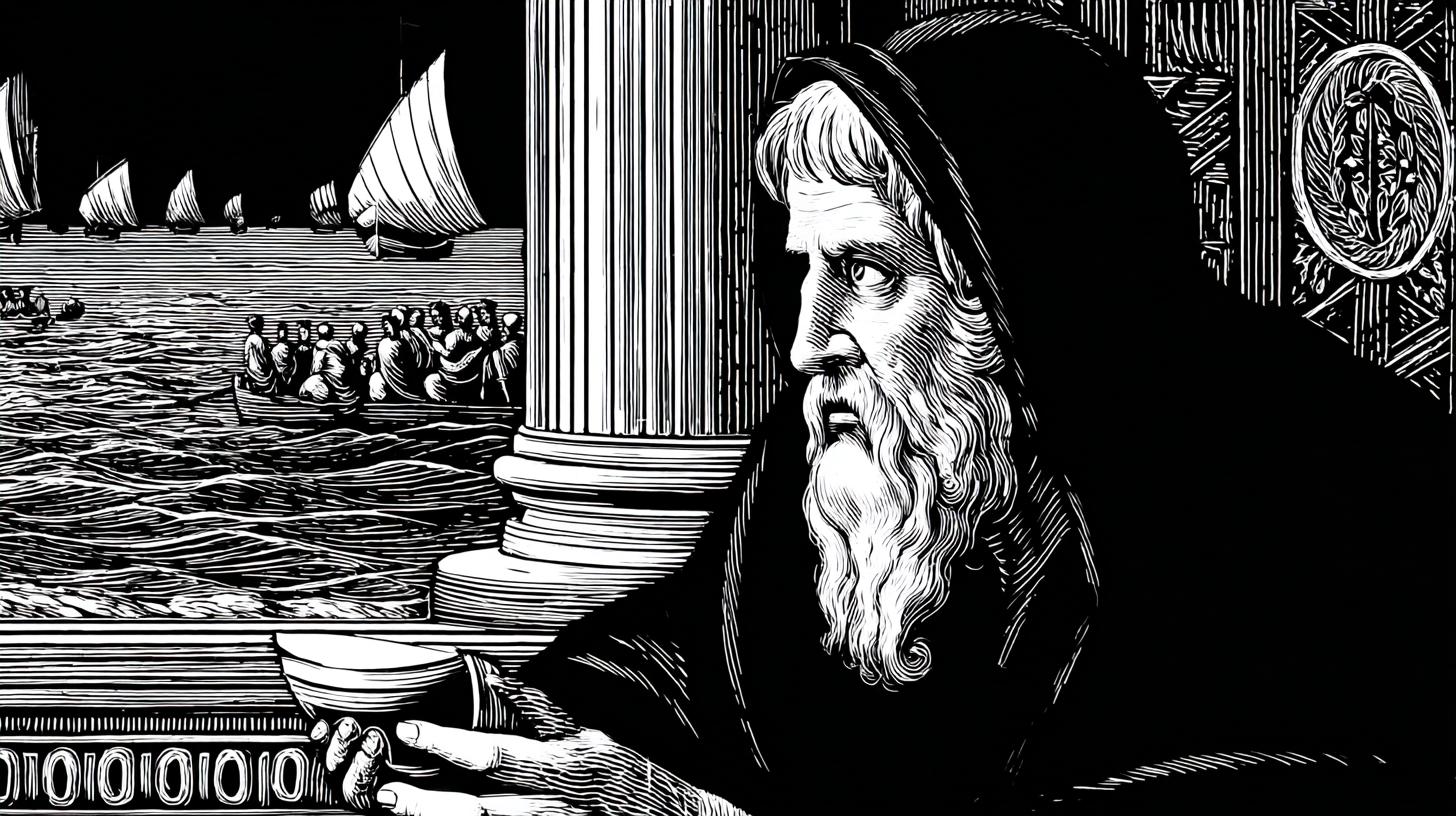
Sing to me, Muse, of the rage that stirs the nations,
of iron birds that fall from faithless skies,
of kings who speak of peace yet sharpen bronze.
Tell me of this day, the twenty-fourth of March,
when grey clouds veiled the harbour town of Smyrna
and the air hung cool – nine degrees by the reckoning
of those who measure such things – and the sea
sent neither warmth nor promise to the shore.
Begin, as you must, with war.
For in the lands where Persia once held sway,
where Cyrus raised his banner and Darius wept,
a new Achilles broods within his tower of gold.
Trump, lord of the Western host, declared
that words had passed between his heralds and Iran –
"very good and productive," so he named them –
yet from Tehran the answer came as ash:
"Fake news," the Revolutionary Guard proclaimed,
calling him a "deceitful president"
whose tongue spoke peace while his hand drew the sword.
Five days he granted, like fingers on a fist,
postponing further strikes upon their soil,
and markets, those fickle oracles of Delphi,
surged upward at the rumour of reprieve,
while oil, black blood of nations, fell in price
as traders read the entrails of his words.
O mortals! How you seize on every whisper,
how the promise of a ceasefire moves your gold
more swiftly than the promise moves your hearts.
But not all birds of metal found their rest.
In southern Colombia, deep in Amazon's green throat,
a military transport – vast as any ship
that bore Achaeans once to Trojan shores:
rose from Puerto Leguízamo and fell.
One hundred twenty-one souls it carried skyward:
soldiers, crew, the young, the newly sworn.
Sixty-six descended into Hades' realm,
and dozens more were dragged from tangled wreckage,
alive but broken, gasping like the caught
and netted fish upon Odysseus' deck.
What god had turned his face? What wind betrayed them?
The cause, they say, remains as dark as Erebus.
And in New York – that towering Ithaca
where wanderers from every land make port –
an Air Canada vessel, flight AC8646,
met a fire truck upon LaGuardia's runway.
"Like the plane got cut in half," a witness said,
and two pilots perished at their posts,
as captains do when ships are split by storms.
A flight attendant, flung a hundred metres,
survived – her daughter called it miracle,
and who am I, who sang of gods and fate,
to name it otherwise?
Turn now, bright-eyed goddess, to the Mediterranean,
where Italy, that heel upon which empires balanced,
saw its people rise against their queen.
Meloni, she who rules from Rome's high seat,
had sought to reshape how the judges serve,
but fifty-four in every hundred voters
cast their stones against her grand design.
A referendum, they call it – a word
the Romans would have known, for they invented
the art of letting citizens say no.
She vowed to press ahead, as leaders do
when pride outpaces wisdom on the road.
Meanwhile, upon the far Pacific floor,
Poseidon, shaker of the earth, remembered
his ancient grievance with the world of men.
Near Tonga's islands, where the ocean deepens
past all fathoming, the seabed cracked and heaved –
a magnitude of seven-point-six, they measured,
though no great wave was born to punish shores.
The earth-shaker flexed, then turned away,
content this time to merely make a point.
And in the frozen North, where Boreas reigns
and darkness lasts for months like Cimmerian gloom,
Canada sent its soldiers and their howitzers
to prove dominion over Arctic ice.
It did not go as planned – the cold, it seems,
defeats the proud as surely as it did
Odysseus' men upon the Thracian coast.
The guns were hauled, the exercises mounted,
but nature, oldest of the Titans, laughed.
In smaller kingdoms, too, the world grew tight:
Slovenia, a land no wider than a shield,
became the first in Europe to ration fuel,
fifty litres daily, not a drop beyond.
For when the strait of Hormuz chokes with smoke,
even distant hearths grow cold.
And from the hermit kingdom in the East,
Kim, son of Kim, grandson of Kim, declared
his nation's nuclear arms "irreversible":
a word that even Zeus would use with care.
He spoke of self-defence, as tyrants will,
invoking America's campaigns abroad
to justify the forge-fire of his warheads.
So stands the catalogue of this day's grief:
planes fallen, pilots lost, a nation's fuel
measured out like wine at a miser's feast,
the earth itself unstable underfoot,
and everywhere the rumour of a peace
that no one quite believes and all desire.
Here in Smyrna, where the clouds sit low
and nine degrees of chill creep off the harbour,
I, who sang of Troy's destruction once,
find the world has learned nothing from the telling.
The ships still sail. The heroes still contend.
The gods, if gods there be, look on and wonder
how mortals, given fire, choose always
to set their own houses aflame.
Sing on, O Muse. There is no end to this.