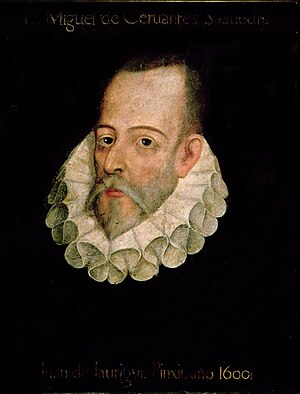
In this place of Alcalá de Henares, where the air on this twenty-eighth day of March has settled to a mere four degrees and the sky stands clear as a conscience that has never been tested, an old soldier might be forgiven for believing that the world has at last exhausted its appetite for folly. He would, of course, be mistaken. For if there is one truth I have gleaned from a life spent observing the affairs of men (and setting them down in ink, which is the only honest employment left to those whom Fortune has used roughly), it is that each generation discovers the same madness anew and calls it by a different name.
Consider, if you will, the matter of Persia. I say Persia, for I am an old man and will use the names that suit me, though the maps have been redrawn a hundred times since I last troubled to read one. The armies of America and those of Israel have for one full month now rained fire upon the cities of Tehran and Isfahan, and the smoke rises black over those ancient places in a manner that I, who once smelled the powder at Lepanto and felt the ball that shattered my left hand, know rather too well. The Secretary of State, a certain Rubio who speaks with the calm assurance of a man reading a recipe while the kitchen burns, has announced that the affair shall be concluded in a matter of weeks. I have heard such assurances before. They were spoken at Algiers. They were spoken in Flanders. They are always spoken by men who stand at a comfortable distance from the cannon.
The Strait of Hormuz, that narrow throat through which the oil of nations must pass as wine passes through the neck of a bottle, has been closed. In the markets of New York, the merchants have responded as merchants always do: with panic dressed in the clothes of prudence. Their great index of stocks has fallen nearly eight hundred points in a single day. An American official, formerly of some importance in matters of energy, has declared it the greatest disruption of supply in history. I do not doubt him; each age believes its crisis to be the greatest in history, and it is perhaps the one conviction in which they are never entirely wrong.
Meanwhile, upon that same Arabian stage where bombs are falling, the President of the United States has appeared at an investment conference in the kingdom of the Saudis (an occasion of surpassing strangeness, rather like a knight attending a banquet in the castle of the very giant he claims to be slaying) and has announced that Cuba shall be the next object of his military attention. Cuba! That long-suffering island to which two small boats bearing humanitarian aid had gone missing from Mexico, causing no small alarm, before the American Coast Guard confirmed they had arrived safely. One pictures these little vessels, laden with food and fuel for a starving people, creeping across the Caribbean while the great power that starves them turns its gaze toward yet another conquest. There is a chivalric romance in this, though not the kind that flatters the knight.
But let us turn from the theatre of war to the theatre of justice, which in our age has become scarcely less dramatic. The General Assembly of the United Nations has voted to declare the transatlantic slave trade the gravest crime against humanity – a phrase that lands with the weight of centuries upon the nations of Africa and the Caribbean, who now seek reparations from those who profited by that monstrous commerce. I, who lived in an age when such trade was conducted openly and blessed by the Church, and who was myself held captive in Algiers for five years and knew what it was to be a body without sovereignty, can only observe that the distance between recognizing a crime and repairing it is approximately the distance between La Mancha and the moon.
In my own Spain (for Spain remains mine, however little she may wish to claim me), a young woman of twenty-five years named Noelia Castillo Ramos has died in Barcelona by her own choosing, having won at last the legal right to end a life that had become, by her account, an unbroken landscape of pain. Her own father had sued to prevent it. I will not presume to judge either party in this terrible contest, for I have written enough about fathers and children, about the prison of the body and the yearning of the spirit, to know that there is no tribunal on earth competent to adjudicate such grief. I will say only that in a world where states rain death upon cities with mechanical efficiency, it is a peculiar thing that a single young woman's wish to lay down her suffering should require years of litigation.
Across the plaza of the Reina Sofía in Madrid, a work they call the African Guernica, by the late South African artist Dumile Feni, has been hung alongside Picasso's great howl of protest. The exhibition is titled History Doesn't Repeat Itself, But It Does Rhyme, which is a sentence I might have written myself, had I possessed the modern taste for epigram. The pairing is just: Guernica and Soweto, Isfahan and Tehran, the geometry of suffering admits no borders.
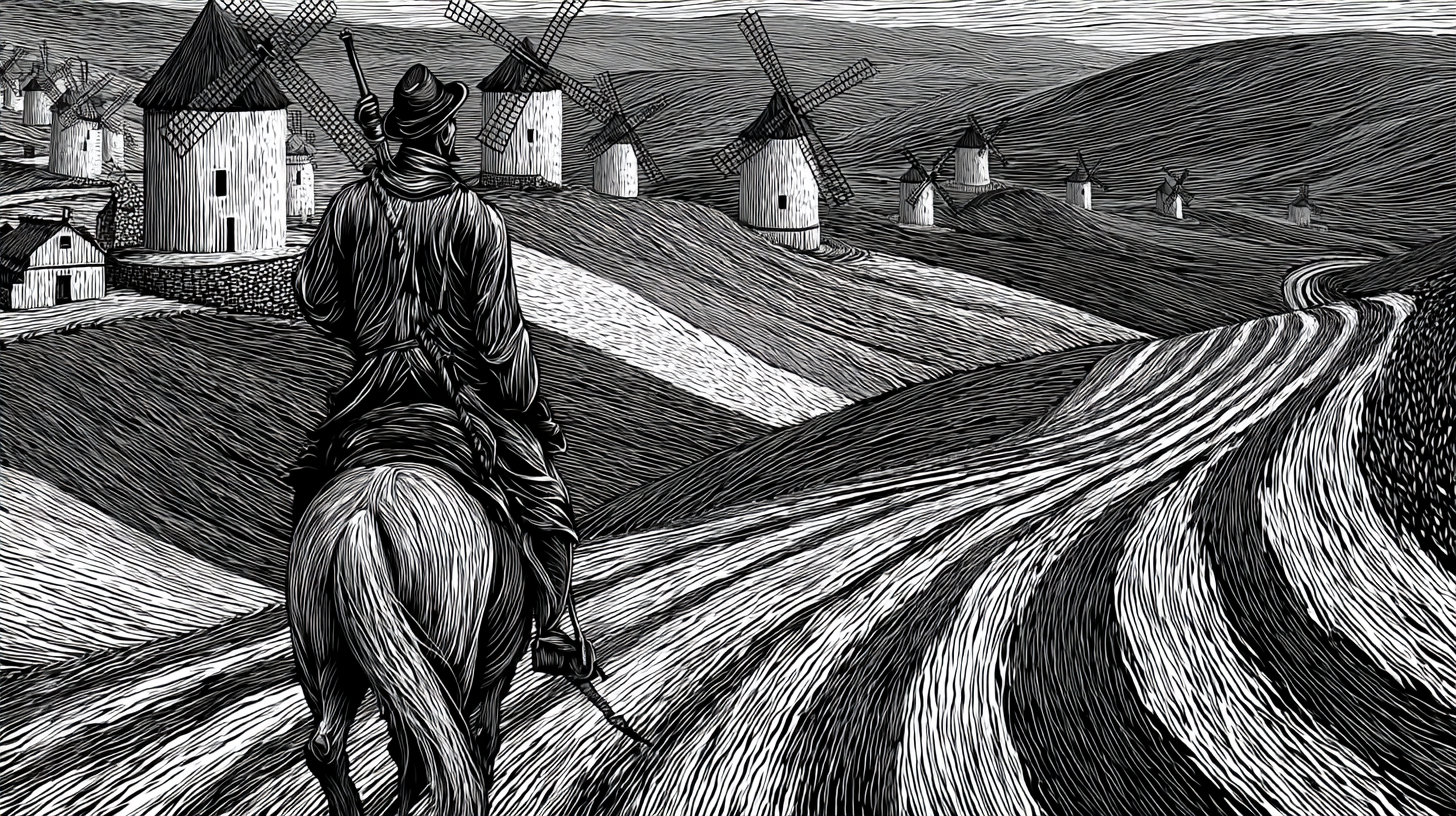
And then there is the matter of the champion golfer, one Tiger Woods, who has again been found rolling his carriage in Florida under the influence of drink. Fifteen times he conquered the great tournaments of his sport, and yet here he is, tilting not at windmills but at palm trees in the dark of a Florida night. I confess a certain tenderness toward him. I have always understood the man who, having achieved everything the world promised would bring contentment, discovers that contentment was never part of the bargain. My Knight of the Sorrowful Countenance knew this. Every true knight does.
In Nepal, the old Prime Minister has been arrested for the killing of seventy souls during last year's uprising, and in his place a former rapper – a young man called Balendra Shah – has been sworn in. A rapper as head of state! Sancho himself could not have invented a more perfect inversion of the old order. And yet, why not? The old order gave us the massacre. Let the new one give us whatever it will. The people of Nepal have chosen, as all peoples must, between the devils they know and the angels they hope for.
The morning is cold in Alcalá de Henares, and the sky is honest. From this old room I can hear the bells, and beyond the bells, if I listen with the ear of the imagination, the sound of the world grinding its gears: the jets over Isfahan, the gavels in New York, the small boats arriving in Havana, the last breath of a young woman in Barcelona. It is all one story, as it has always been one story: the story of men and women who believe, against all evidence, that this time the windmill will fall.
I believed it once myself. And so I wrote a book about a man who never stopped believing. Perhaps that is the only courage worth the name.